RRB NTPC · প্রশ্ন 24
প্রাচীন ইন্দো-ব্রহ্ম নদীর সিন্ধু, গঙ্গা এবং ব্রহ্মপুত্র নিষ্কাশন ব্যবস্থায় বিভক্ত হওয়ার প্রধান কারণ হিসেবে কোন ভূতাত্ত্বিক ঘটনাকে মনে করা হয়?
উত্তর দেখান ও ব্যাখ্যাব্যাখ্যা দেখুন
উত্তর: (A) প্লাইস্টোসিন উত্থান
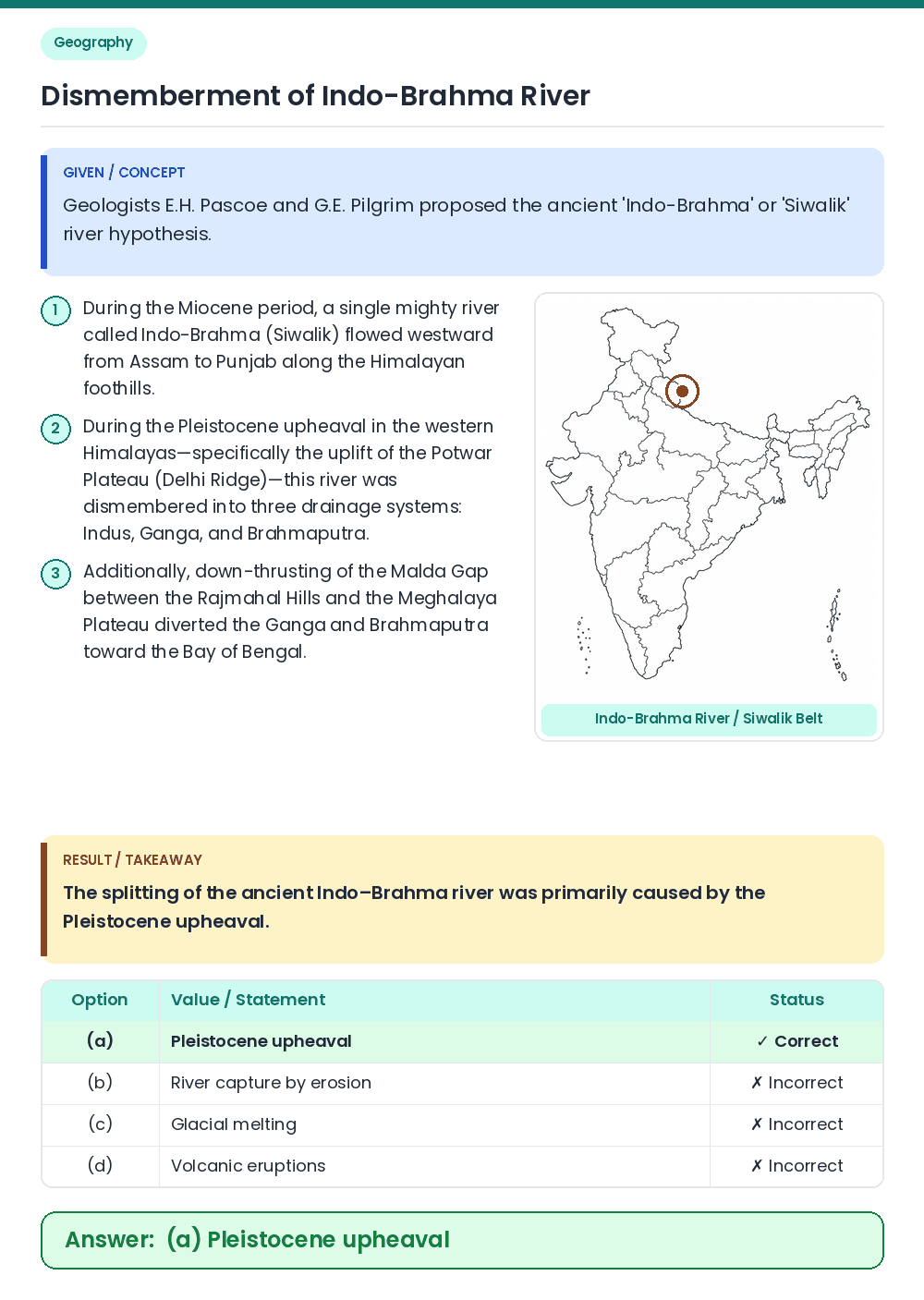
• Geologists E.H. Pascoe and G.E. Pilgrim proposed the ancient 'Indo-Brahma' or 'Siwalik' river hypothesis. • The splitting of the ancient Indo–Brahma river was primarily caused by the Pleistocene upheaval. Related Facts: • During the Miocene period, a single mighty river called Indo-Brahma (Siwalik) flowed westward from Assam to Punjab along the Himalayan foothills. • During the Pleistocene upheaval in the western Himalayas—specifically the uplift of the Potwar Plateau (Delhi Ridge)—this river was dismembered into three drainage systems: Indus, Ganga, and Brahmaputra. • Additionally, down-thrusting of the Malda Gap between the Rajmahal Hills and the Meghalaya Plateau diverted the Ganga and Brahmaputra toward the Bay of Bengal. Correct Answer: (a) Pleistocene upheaval