RRB NTPC · প্রশ্ন 61
যদি ভারত সরকার দেশের স্বার্থের বিরুদ্ধে কাজ করার জন্য কোনও ব্যক্তির নাগরিকত্ব বাতিল করে, তবে কোন সাংবিধানিক বা সংবিধিবদ্ধ বিধান এটি করার ক্ষমতা দেয়?
উত্তর দেখান ও ব্যাখ্যাব্যাখ্যা দেখুন
উত্তর: (C) নাগরিকত্ব আইন, 1955-এর ধারা 10
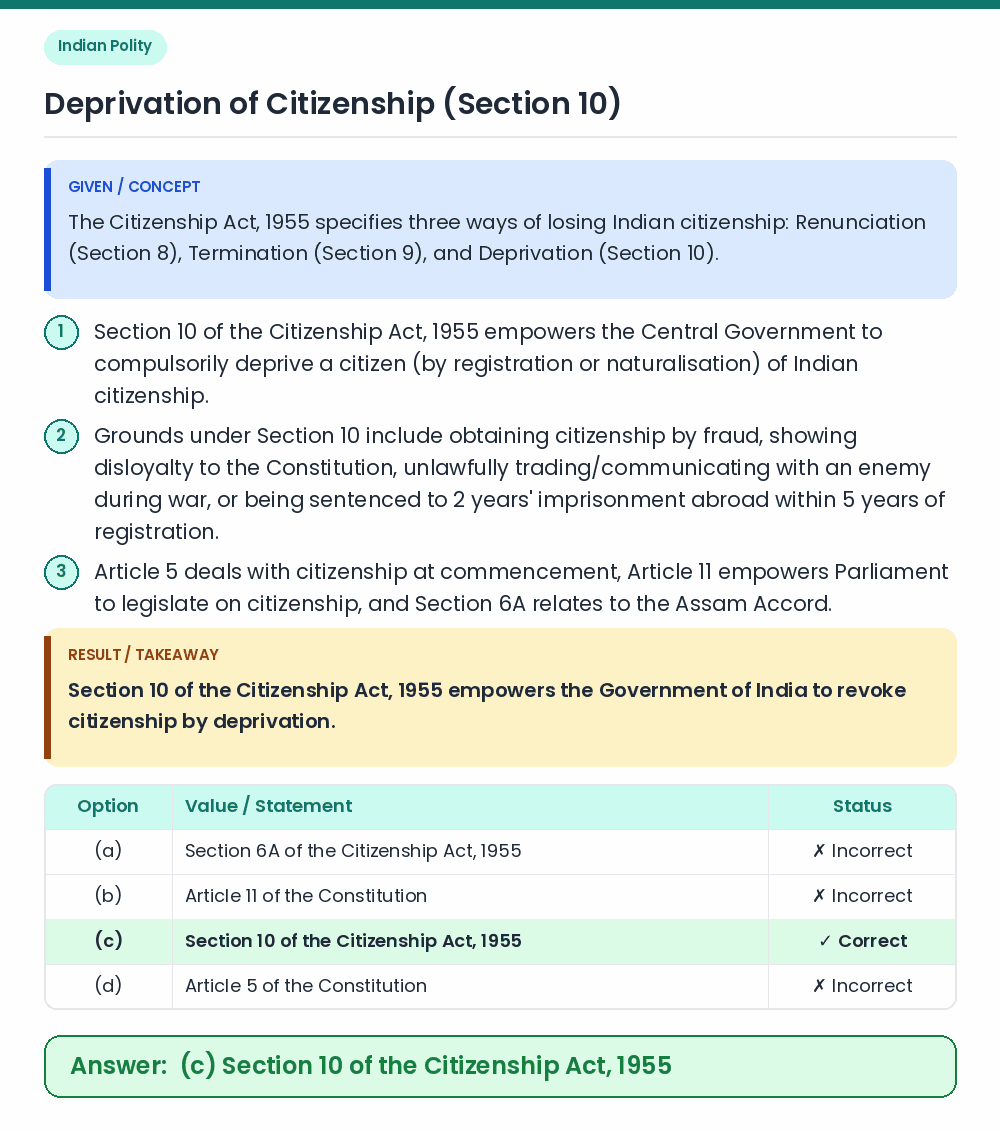
• Section 10 of the Citizenship Act, 1955 empowers the Government of India to revoke citizenship by deprivation. • The Citizenship Act, 1955 specifies three ways of losing Indian citizenship: Renunciation (Section 8), Termination (Section 9), and Deprivation (Section 10). Related Facts: • Section 10 of the Citizenship Act, 1955 empowers the Central Government to compulsorily deprive a citizen (by registration or naturalisation) of Indian citizenship. • Grounds under Section 10 include obtaining citizenship by fraud, showing disloyalty to the Constitution, unlawfully trading/communicating with an enemy during war, or being sentenced to 2 years' imprisonment abroad within 5 years of registration. • Article 5 deals with citizenship at commencement, Article 11 empowers Parliament to legislate on citizenship, and Section 6A relates to the Assam Accord. Correct Answer: (c) Section 10 of the Citizenship Act, 1955