RRB NTPC · પ્રશ્ન 4
સલ્તનતની ઇમારતોમાં સુશોભનનું પ્રભાવી સ્વરૂપ કયું છે?
જવાબ બતાવો અને સમજૂતીસમજૂતી જુઓ
જવાબ: (C) અરેબેસ્ક
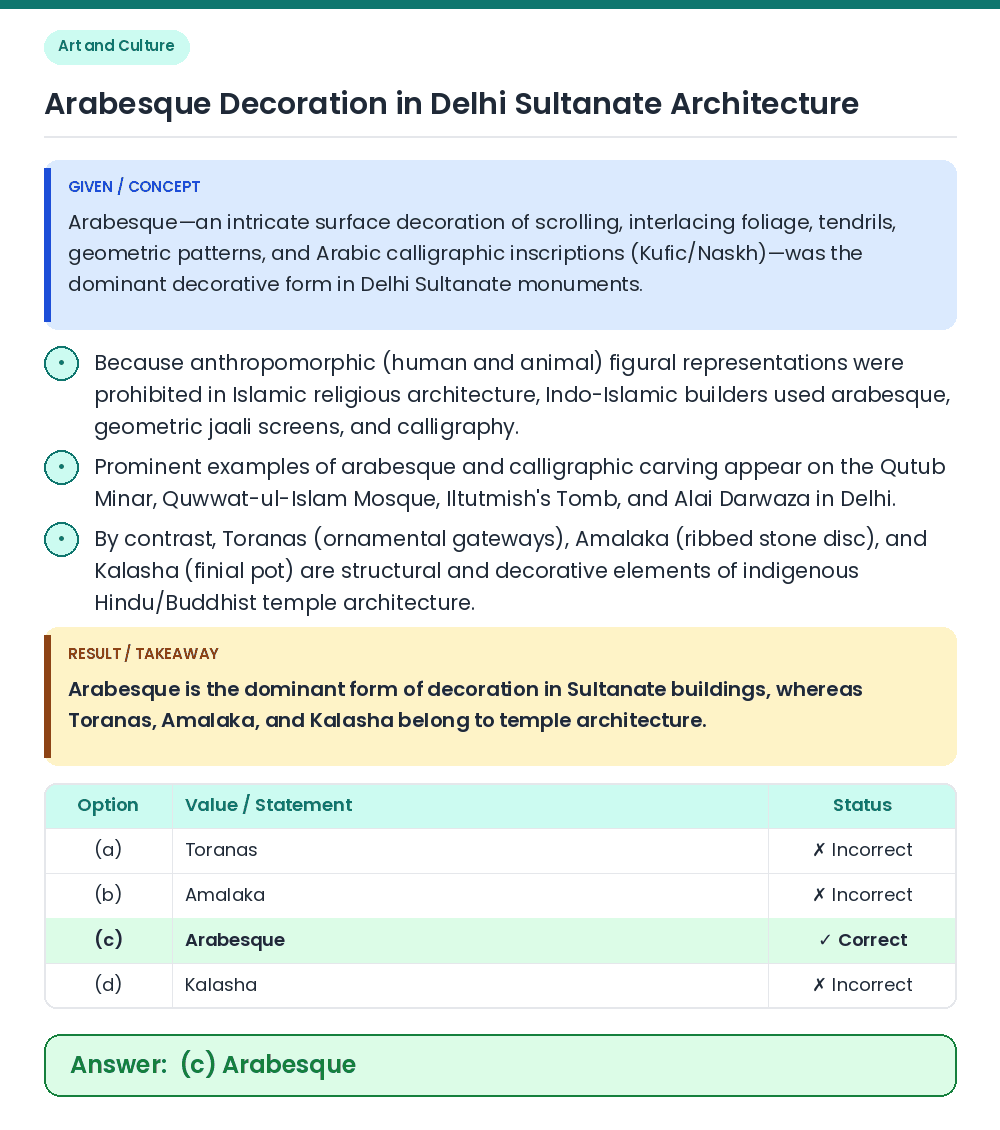
• Arabesque—an intricate surface decoration of scrolling, interlacing foliage, tendrils, geometric patterns, and Arabic calligraphic inscriptions (Kufic/Naskh)—was the dominant decorative form in Delhi Sultanate monuments. • Arabesque is the dominant form of decoration in Sultanate buildings, whereas Toranas, Amalaka, and Kalasha belong to temple architecture. Related Facts: • Because anthropomorphic (human and animal) figural representations were prohibited in Islamic religious architecture, Indo-Islamic builders used arabesque, geometric jaali screens, and calligraphy. • Prominent examples of arabesque and calligraphic carving appear on the Qutub Minar, Quwwat-ul-Islam Mosque, Iltutmish's Tomb, and Alai Darwaza in Delhi. • By contrast, Toranas (ornamental gateways), Amalaka (ribbed stone disc), and Kalasha (finial pot) are structural and decorative elements of indigenous Hindu/Buddhist temple architecture. Correct Answer: (c) Arabesque