RRB NTPC · ಪ್ರಶ್ನೆ 96
ಈ ಪ್ರಶ್ನೆಯಲ್ಲಿ, ಒಂದು ಪ್ರಶ್ನೆಯ ನಂತರ (I) ಮತ್ತು (II) ಸಂಖ್ಯೆಯ ಎರಡು ಹೇಳಿಕೆಗಳಿವೆ. ಪ್ರಶ್ನೆಗೆ ಉತ್ತರಿಸಲು ಹೇಳಿಕೆಗಳಲ್ಲಿ ಒದಗಿಸಲಾದ ದತ್ತಾಂಶವು ಸಾಕಾಗಿದೆಯೇ ಎಂದು ನೀವು ನಿರ್ಧರಿಸಬೇಕು. ಎರಡೂ ಹೇಳಿಕೆಗಳನ್ನು ಓದಿ ಮತ್ತು ಸೂಕ್ತವಾದ ಉತ್ತರವನ್ನು ನಿರ್ಧರಿಸಿ. ಪ್ರಶ್ನೆ. ಐದು ಸ್ನೇಹಿತರು - ಗೌರವ್, ಹಿಮಾಂಶು, ಇಶಾನ್, ಲೋಕೇಶ್ ಮತ್ತು ಮುಕುಲ್ - ವಿವಿಧ ವಯಸ್ಸಿನವರು. ಮೂರನೇ ಹಿರಿಯರು ಯಾರು? (I) ಇಶಾನ್ ಗೌರವ್ಗಿಂತ ಹಿರಿಯ ಆದರೆ ಲೋಕೇಶ್ಗಿಂತ ಕಿರಿಯ. (II) ಮುಕುಲ್ ಇಶಾನ್ಗಿಂತ ಹಿರಿಯ ಆದರೆ ಲೋಕೇಶ್ಗಿಂತ ಕಿರಿಯ.
ಉತ್ತರ ತೋರಿಸು ಮತ್ತು ವಿವರಣೆವಿವರಣೆ ನೋಡಿ
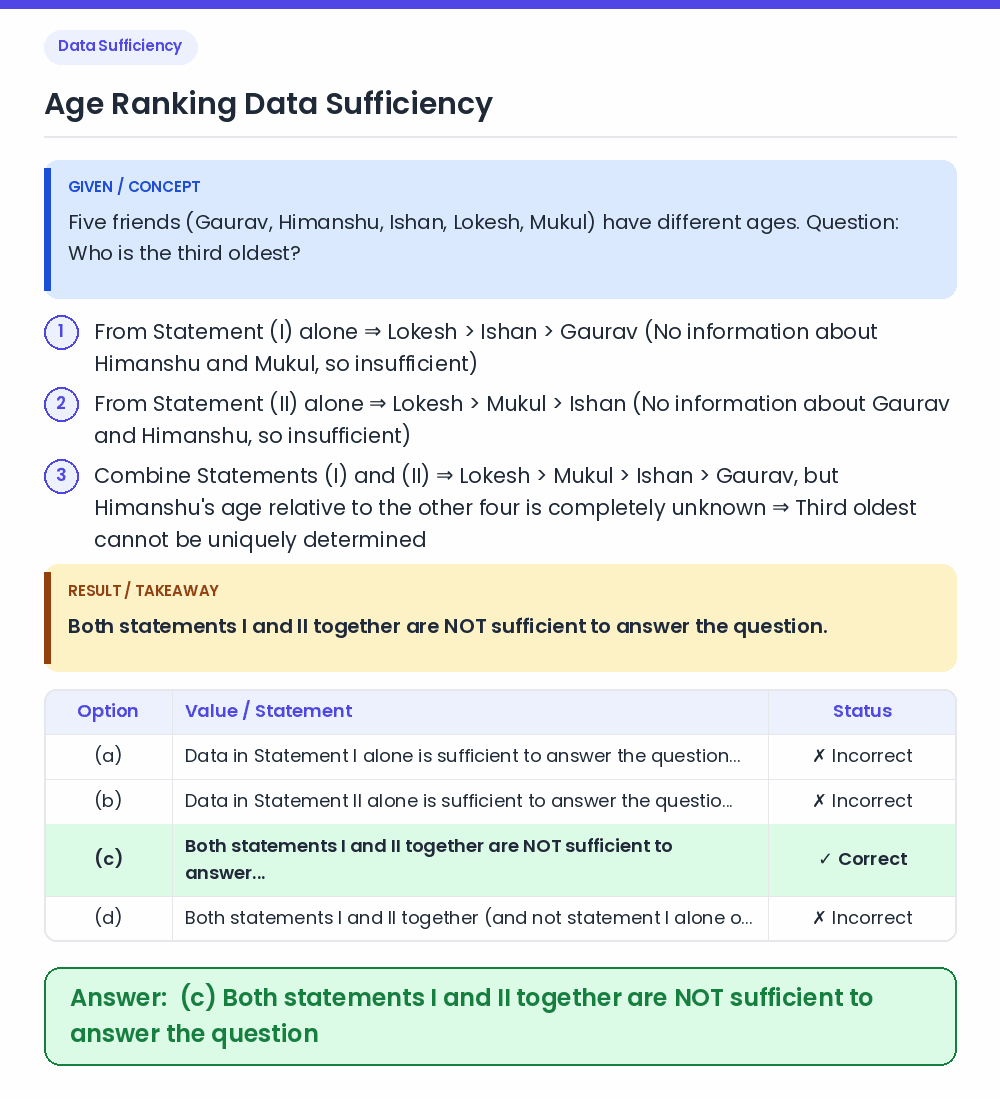
ಉತ್ತರ: (C) ಹೇಳಿಕೆ I ಮತ್ತು II ಎರಡೂ ಒಟ್ಟಾಗಿ ಪ್ರಶ್ನೆಗೆ ಉತ್ತರಿಸಲು ಸಾಕಾಗುವುದಿಲ್ಲ
GIVEN / CONCEPT: Five friends (Gaurav, Himanshu, Ishan, Lokesh, Mukul) have different ages. Question: Who is the third oldest? Step 1 (Relation / Equation): From Statement (I) alone ⇒ Lokesh > Ishan > Gaurav (No information about Himanshu and Mukul, so insufficient) Step 2 (Simplification / Calculation): From Statement (II) alone ⇒ Lokesh > Mukul > Ishan (No information about Gaurav and Himanshu, so insufficient) Step 3 (Verification / Deduction): Combine Statements (I) and (II) ⇒ Lokesh > Mukul > Ishan > Gaurav, but Himanshu's age relative to the other four is completely unknown ⇒ Third oldest cannot be uniquely determined RESULT / TAKEAWAY: Both statements I and II together are NOT sufficient to answer the question. Correct Answer: (c) Both statements I and II together are NOT sufficient to answer the question