RRB NTPC · ಪ್ರಶ್ನೆ 39
ಈ ಪ್ರಶ್ನೆಯಲ್ಲಿ, ಒಂದು ಪ್ರಶ್ನೆಯನ್ನು ಎರಡು ಹೇಳಿಕೆಗಳಾದ (I) ಮತ್ತು (II) ಅನುಸರಿಸುತ್ತವೆ. ಪ್ರಶ್ನೆಗೆ ಉತ್ತರಿಸಲು ಹೇಳಿಕೆಗಳಲ್ಲಿ ಒದಗಿಸಲಾದ ದತ್ತಾಂಶವು ಸಾಕಾಗುತ್ತದೆಯೇ ಎಂದು ನೀವು ನಿರ್ಧರಿಸಬೇಕು. ಎರಡೂ ಹೇಳಿಕೆಗಳನ್ನು ಓದಿ ಮತ್ತು ಸೂಕ್ತವಾದ ಉತ್ತರವನ್ನು ನಿರ್ಧರಿಸಿ. ಪ್ರಶ್ನೆ: 5 ಮರಗಳಾದ L, M, N, T ಮತ್ತು V ಗಳಲ್ಲಿ ಪ್ರತಿಯೊಂದೂ ವಿಭಿನ್ನ ಎತ್ತರವನ್ನು ಹೊಂದಿದ್ದು, ಯಾವ ಮರವು ಅತಿ ಎತ್ತರವಾಗಿದೆ? ಹೇಳಿಕೆಗಳು: (I) M ಎಂಬುದು V ಗಿಂತ ಎತ್ತರವಾಗಿದೆ ಆದರೆ N ಗಿಂತ ಕಡಿಮೆ ಎತ್ತರವಿದೆ. M ಎಂಬುದು ಕೇವಲ ಒಂದು ಮರಕ್ಕಿಂತ ಕಡಿಮೆ ಎತ್ತರವಿದೆ. (II) V ಎಂಬುದು T ಗಿಂತ ಎತ್ತರವಾಗಿದೆ.
ಉತ್ತರ ತೋರಿಸು ಮತ್ತು ವಿವರಣೆವಿವರಣೆ ನೋಡಿ
ಉತ್ತರ: (B) ಹೇಳಿಕೆ I ರಲ್ಲಿನ ದತ್ತಾಂಶವು ಪ್ರಶ್ನೆಗೆ ಉತ್ತರಿಸಲು ಸಾಕಾಗುತ್ತದೆ ಆದರೆ ಹೇಳಿಕೆ II ರಲ್ಲಿನ ದತ್ತಾಂಶ ಸಾಕಾಗುವುದಿಲ್ಲ
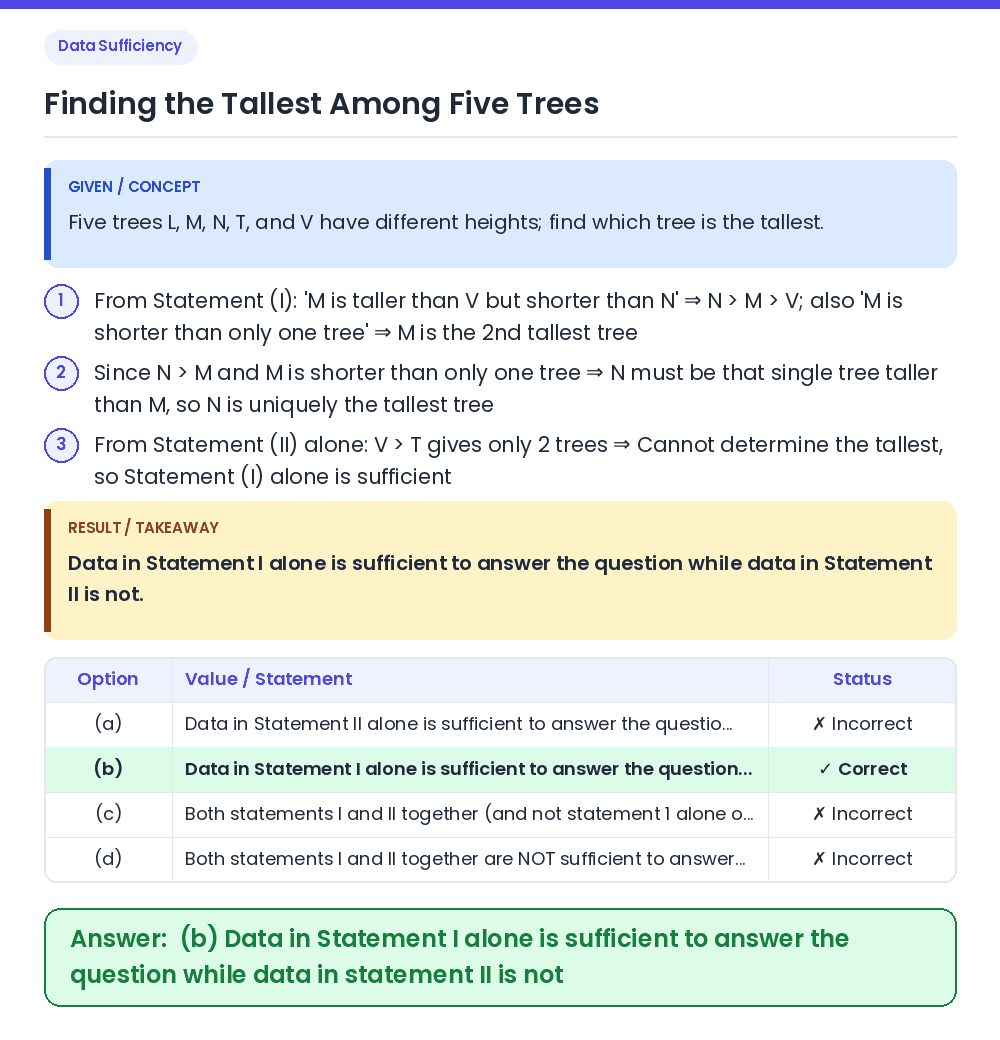
GIVEN / CONCEPT: Five trees L, M, N, T, and V have different heights; find which tree is the tallest. From Statement (I): 'M is taller than V but shorter than N' ⇒ N > M > V; also 'M is shorter than only one tree' ⇒ M is the 2nd tallest tree Simplification / Calculation: Since N > M and M is shorter than only one tree ⇒ N must be that single tree taller than M, so N is uniquely the tallest tree From Statement (II) alone: V > T gives only 2 trees ⇒ Cannot determine the tallest, so Statement (I) alone is sufficient RESULT / TAKEAWAY: Data in Statement I alone is sufficient to answer the question while data in Statement II is not. Correct Answer: (b) Data in Statement I alone is sufficient to answer the question while data in statement II is not