RRB NTPC · ಪ್ರಶ್ನೆ 78
ಈ ಪ್ರಶ್ನೆಯಲ್ಲಿ, ಒಂದು ಪ್ರಶ್ನೆಯ ನಂತರ (I) ಮತ್ತು (II) ಸಂಖ್ಯೆಯ ಎರಡು ಹೇಳಿಕೆಗಳಿವೆ. ಪ್ರಶ್ನೆಗೆ ಉತ್ತರಿಸಲು ಹೇಳಿಕೆಗಳಲ್ಲಿ ಒದಗಿಸಲಾದ ದತ್ತಾಂಶಗಳು ಸಾಕಾಗುತ್ತವೆಯೇ ಎಂದು ನೀವು ನಿರ್ಧರಿಸಬೇಕು. ಎರಡೂ ಹೇಳಿಕೆಗಳನ್ನು ಓದಿ ಮತ್ತು ಸೂಕ್ತವಾದ ಉತ್ತರವನ್ನು ನಿರ್ಧರಿಸಿ. ಪ್ರಶ್ನೆ: L, M, N, T ಮತ್ತು V ಎಂಬ 5 ಮರಗಳಲ್ಲಿ, ಪ್ರತಿಯೊಂದೂ ವಿಭಿನ್ನ ಎತ್ತರವನ್ನು ಹೊಂದಿದ್ದು, ಯಾವ ಮರವು ಅತಿ ಚಿಕ್ಕದಾಗಿದೆ? ಹೇಳಿಕೆಗಳು: (I) N ಕೇವಲ ಮೂರು ಮರಗಳಿಗಿಂತ ಚಿಕ್ಕದಾಗಿದೆ. (II) N, M ಗಿಂತ ಎತ್ತರವಾಗಿದೆ ಆದರೆ T ಗಿಂತ ಚಿಕ್ಕದಾಗಿದೆ.
ಉತ್ತರ ತೋರಿಸು ಮತ್ತು ವಿವರಣೆವಿವರಣೆ ನೋಡಿ
ಉತ್ತರ: (D) ಹೇಳಿಕೆ I ಮತ್ತು II ಎರಡೂ ಒಟ್ಟಾಗಿ (ಮತ್ತು ಹೇಳಿಕೆ 1 ಮಾತ್ರ ಅಥವಾ ಹೇಳಿಕೆ II ಮಾತ್ರ ಅಲ್ಲ) ಪ್ರಶ್ನೆಗೆ ಉತ್ತರಿಸಲು ಸಾಕಾಗುತ್ತದೆ
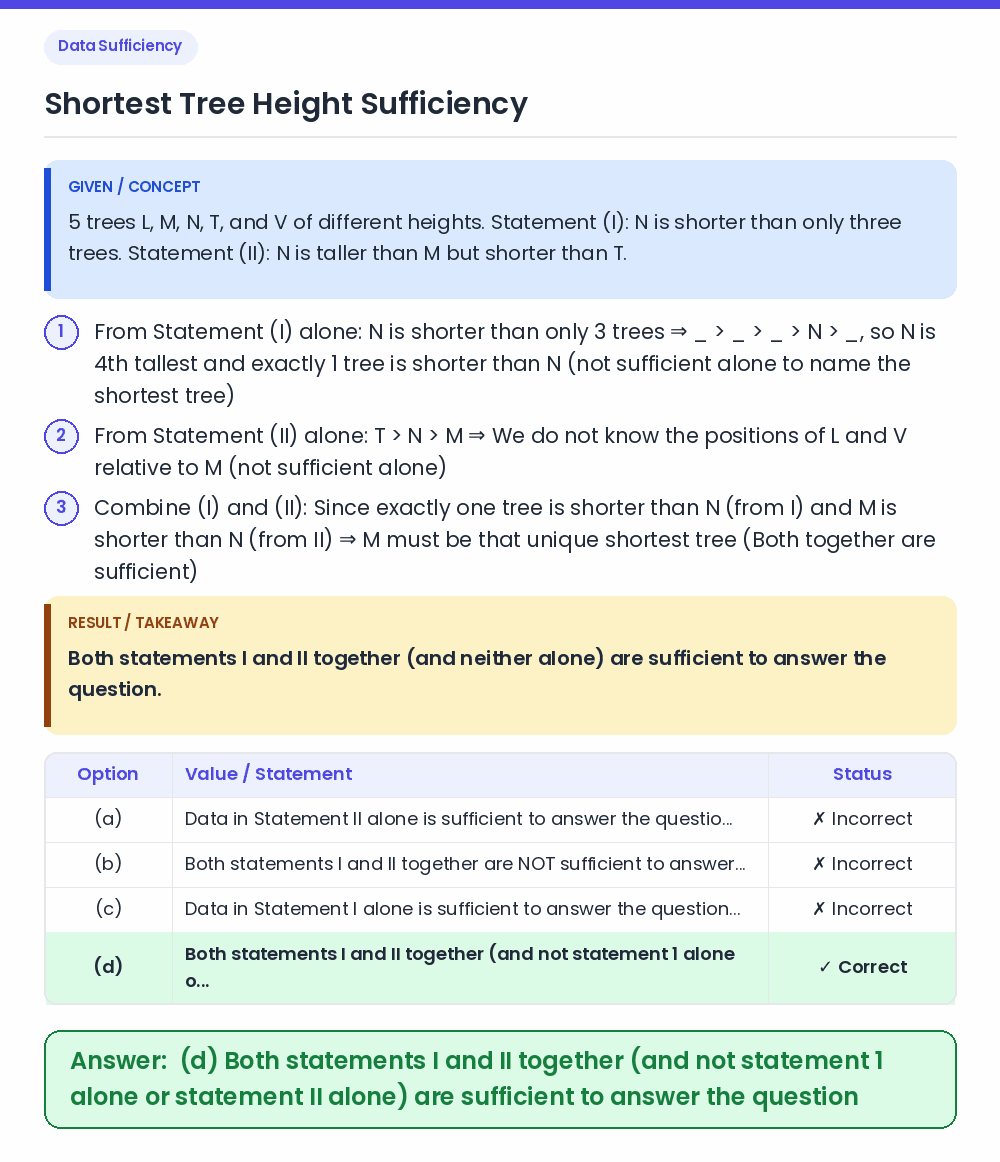
GIVEN / CONCEPT: 5 trees L, M, N, T, and V of different heights. Statement (I): N is shorter than only three trees. Statement (II): N is taller than M but shorter than T. Step 1 (Relation / Equation): From Statement (I) alone: N is shorter than only 3 trees ⇒ _ > _ > _ > N > _, so N is 4th tallest and exactly 1 tree is shorter than N (not sufficient alone to name the shortest tree) Step 2 (Simplification / Calculation): From Statement (II) alone: T > N > M ⇒ We do not know the positions of L and V relative to M (not sufficient alone) Step 3 (Verification / Deduction): Combine (I) and (II): Since exactly one tree is shorter than N (from I) and M is shorter than N (from II) ⇒ M must be that unique shortest tree (Both together are sufficient) RESULT / TAKEAWAY: Both statements I and II together (and neither alone) are sufficient to answer the question. Correct Answer: (d) Both statements I and II together (and not statement 1 alone or statement II alone) are sufficient to answer the question