RRB NTPC · प्रश्न 24
प्राचीन इंडो-ब्रह्म नदीचे सिंधू, गंगा आणि ब्रह्मपुत्रा जलनिस्सारण प्रणालींमध्ये विभाजन होण्याचे मुख्य कारण कोणती भूवैज्ञानिक घटना मानली जाते?
उत्तर दाखवा आणि स्पष्टीकरणस्पष्टीकरण पहा
उत्तर: (A) प्लेस्टोसीन काळातील उठाव
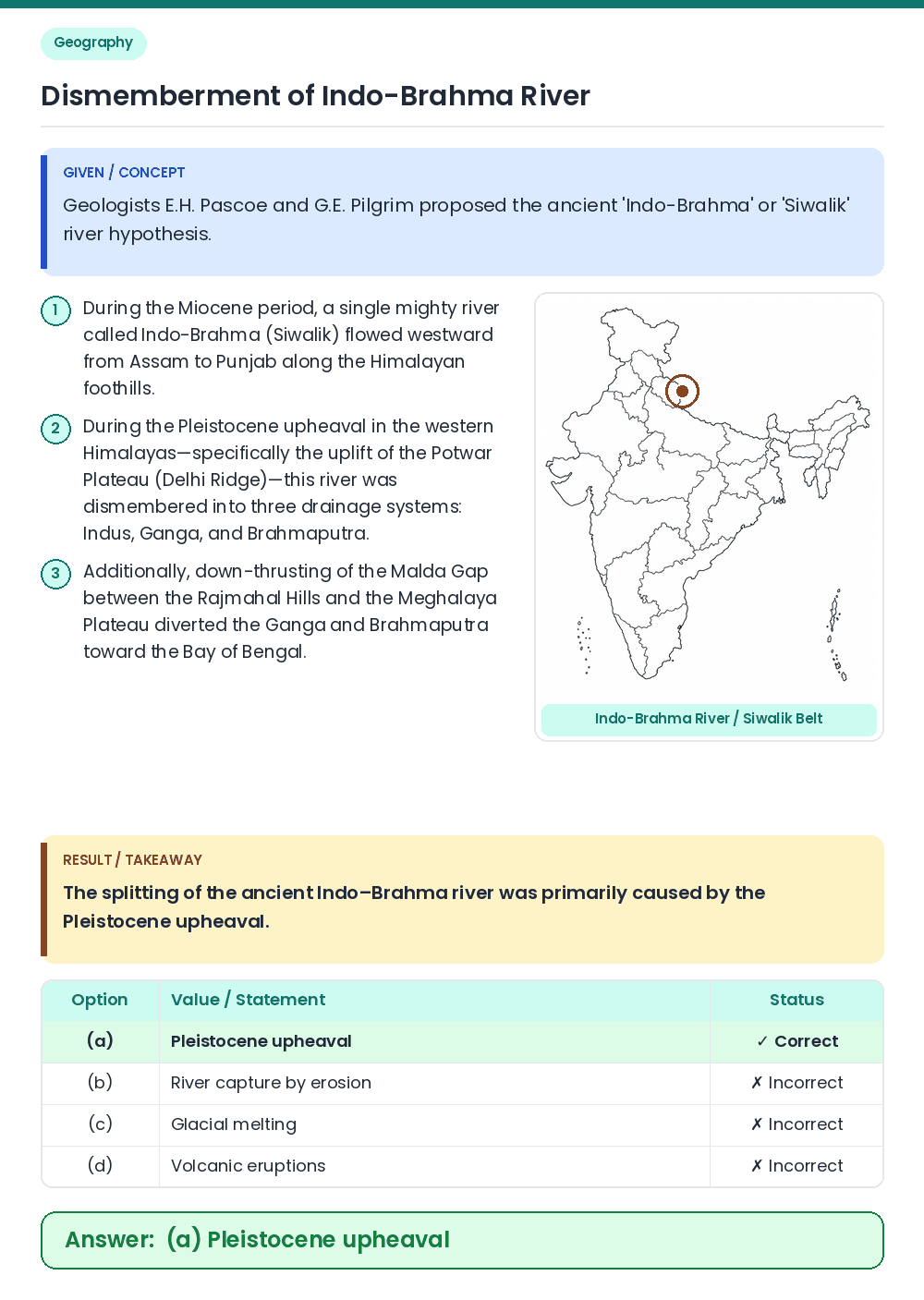
• Geologists E.H. Pascoe and G.E. Pilgrim proposed the ancient 'Indo-Brahma' or 'Siwalik' river hypothesis. • The splitting of the ancient Indo–Brahma river was primarily caused by the Pleistocene upheaval. Related Facts: • During the Miocene period, a single mighty river called Indo-Brahma (Siwalik) flowed westward from Assam to Punjab along the Himalayan foothills. • During the Pleistocene upheaval in the western Himalayas—specifically the uplift of the Potwar Plateau (Delhi Ridge)—this river was dismembered into three drainage systems: Indus, Ganga, and Brahmaputra. • Additionally, down-thrusting of the Malda Gap between the Rajmahal Hills and the Meghalaya Plateau diverted the Ganga and Brahmaputra toward the Bay of Bengal. Correct Answer: (a) Pleistocene upheaval