RRB NTPC · प्रश्न 59
जेव्हा राज्य विधिमंडळाने संमत केलेला कायदा समवर्ती सूचीतील विषयावरील संसदीय कायद्याशी विसंगत ठरतो, तेव्हा त्याचा कायदेशीर परिणाम काय होतो?
उत्तर दाखवा आणि स्पष्टीकरणस्पष्टीकरण पहा
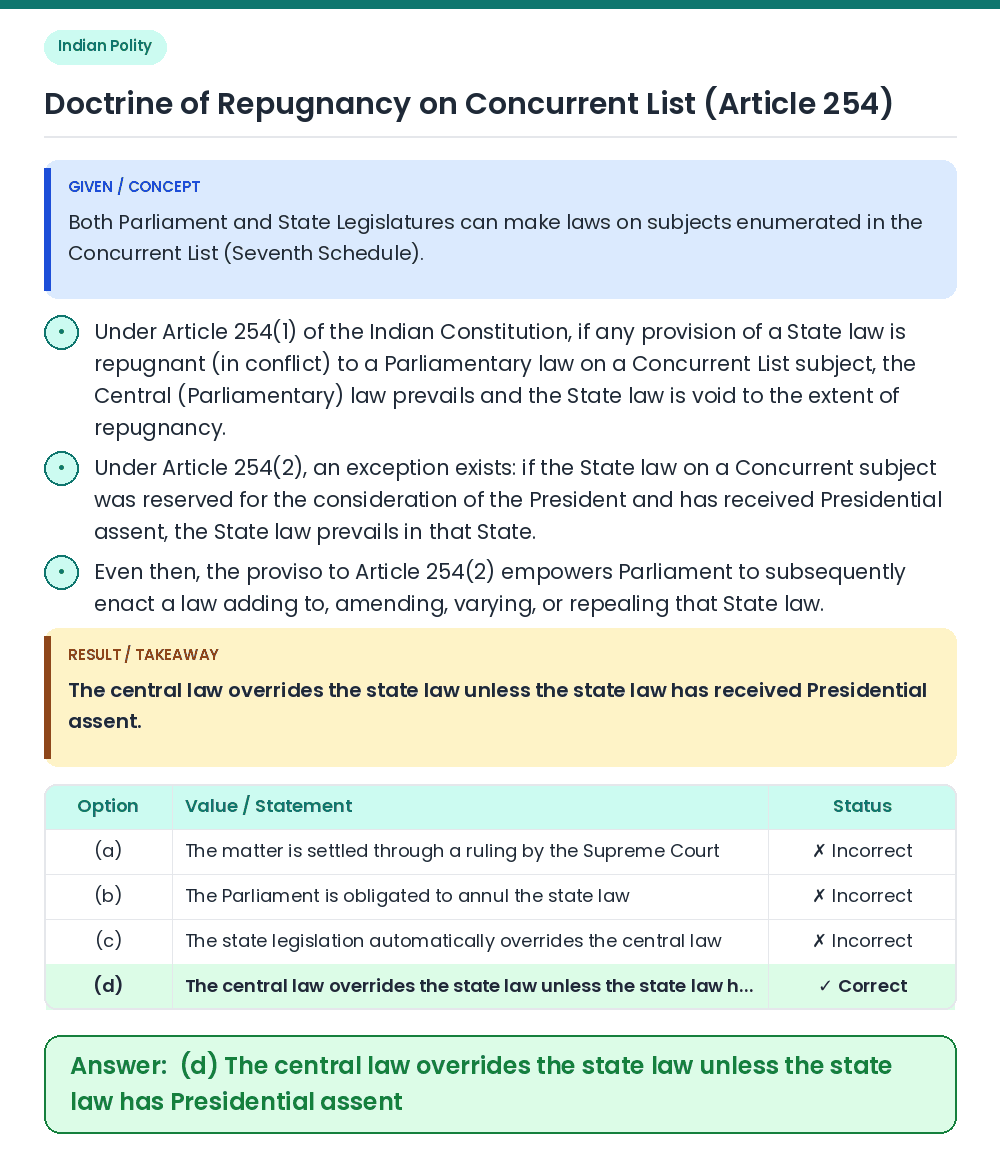
उत्तर: (D) राज्य कायद्याला राष्ट्रपतींची संमती असल्याशिवाय केंद्रीय कायदा राज्य कायद्यापेक्षा वरचढ ठरतो
• Both Parliament and State Legislatures can make laws on subjects enumerated in the Concurrent List (Seventh Schedule). • The central law overrides the state law unless the state law has received Presidential assent. Related Facts: • Under Article 254(1) of the Indian Constitution, if any provision of a State law is repugnant (in conflict) to a Parliamentary law on a Concurrent List subject, the Central (Parliamentary) law prevails and the State law is void to the extent of repugnancy. • Under Article 254(2), an exception exists: if the State law on a Concurrent subject was reserved for the consideration of the President and has received Presidential assent, the State law prevails in that State. • Even then, the proviso to Article 254(2) empowers Parliament to subsequently enact a law adding to, amending, varying, or repealing that State law. Correct Answer: (d) The central law overrides the state law unless the state law has Presidential assent