RRB NTPC · ప్రశ్న 13
1991 ఆర్థిక సంస్కరణల తర్వాత భారతదేశ ద్రవ్య విధానంలో కింది వాటిలో ఏది నిర్మాణాత్మక సర్దుబాటును ప్రతిబింబిస్తుంది?
సమాధానం చూపించు & వివరణవివరణ చూడండి
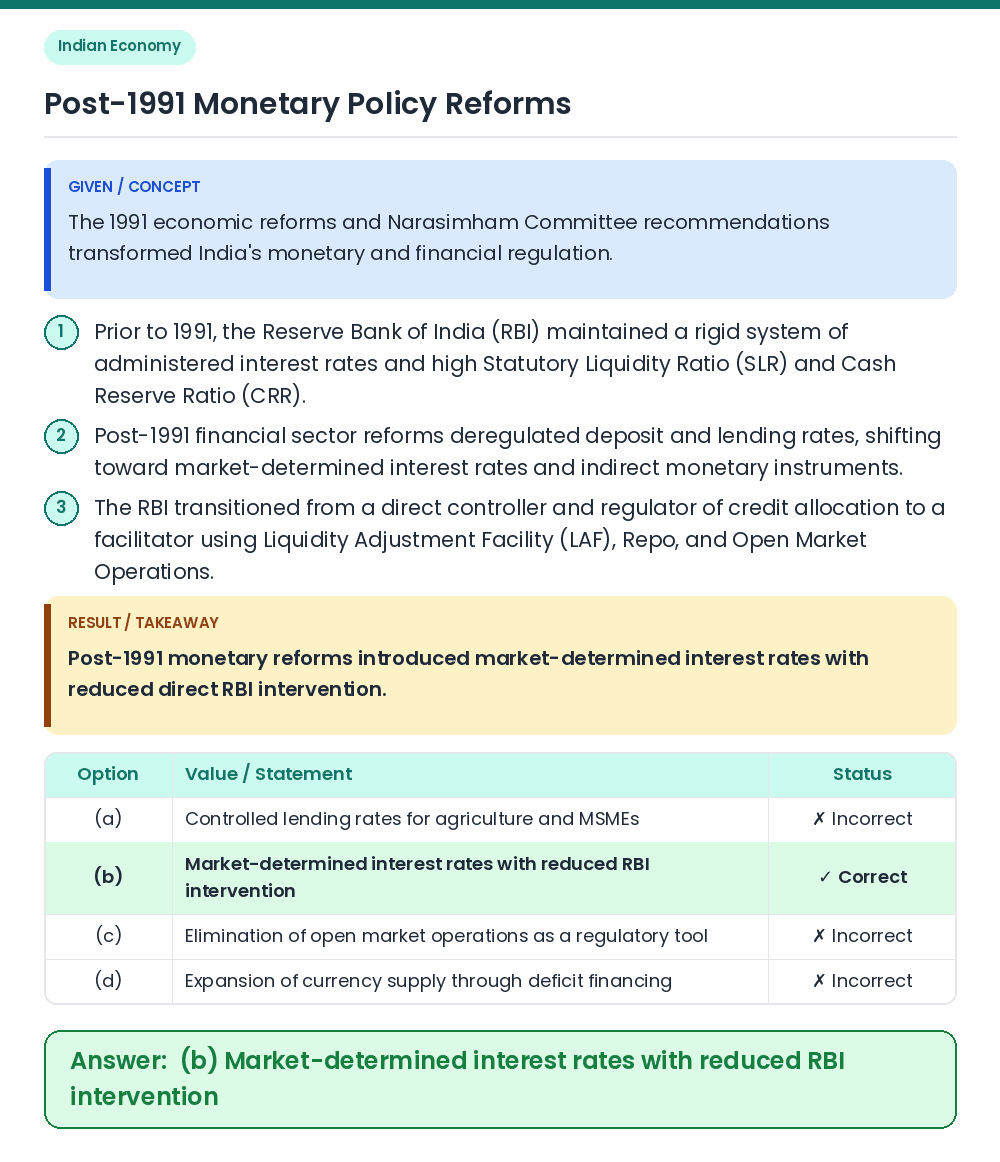
సమాధానం: (B) తగ్గిన RBI జోక్యంతో మార్కెట్-నిర్ణయించిన వడ్డీ రేట్లు
• Post-1991 monetary reforms introduced market-determined interest rates with reduced direct RBI intervention. • The 1991 economic reforms and Narasimham Committee recommendations transformed India's monetary and financial regulation. Related Facts: • Prior to 1991, the Reserve Bank of India (RBI) maintained a rigid system of administered interest rates and high Statutory Liquidity Ratio (SLR) and Cash Reserve Ratio (CRR). • Post-1991 financial sector reforms deregulated deposit and lending rates, shifting toward market-determined interest rates and indirect monetary instruments. • The RBI transitioned from a direct controller and regulator of credit allocation to a facilitator using Liquidity Adjustment Facility (LAF), Repo, and Open Market Operations. Correct Answer: (b) Market-determined interest rates with reduced RBI intervention