SSC CHSL – Combined Higher Secondary (10+2) Level Examination · प्रश्न 22
“Regular inspection is equally critical.” Change the above sentence into an interrogative sentence without changing its meaning. Read the passage and answer the following questions: In today’s homes, electrical devices are as ordinary as furniture. From refrigerators and washing machines to smart televisions and microwave ovens, these appliances have reshaped domestic life. However, their growing presence has also increased the risks, especially for children, whose natural curiosity often overrides caution. Electrical devices run on currents that can cause serious injury or even death if mishandled. Young children, unaware of these dangers, may put fingers or objects into sockets, pull on dangling cords, or try to open appliance panels. Such actions can lead to shocks, burns, or mechanical harm. Even low-voltage devices can be hazardous if they are defective or poorly maintained. The responsibility for preventing accidents rests largely with adults. Simple precautions include installing socket covers, keeping cords out of reach, and unplugging appliances when not in use. More advanced measures involve using Residual Current Devices (RCDs), which automatically cut off power during faults, and ensuring that all wiring complies with safety standards. Regular inspection is equally critical, as frayed wires or exposed parts can turn everyday items into hidden threats. Education also plays a vital role. Teaching children the “look, don’t touch” rule, explaining electrical dangers in age-appropriate terms, and supervising them around devices are effective strategies. Safety is not only about physical barriers but also about fostering awareness. Ultimately, a home filled with electrical conveniences does not have to become a danger zone. With vigilant supervision, families can enjoy technology while safeguarding their youngest members.
उत्तर देखें और व्याख्याव्याख्या देखें
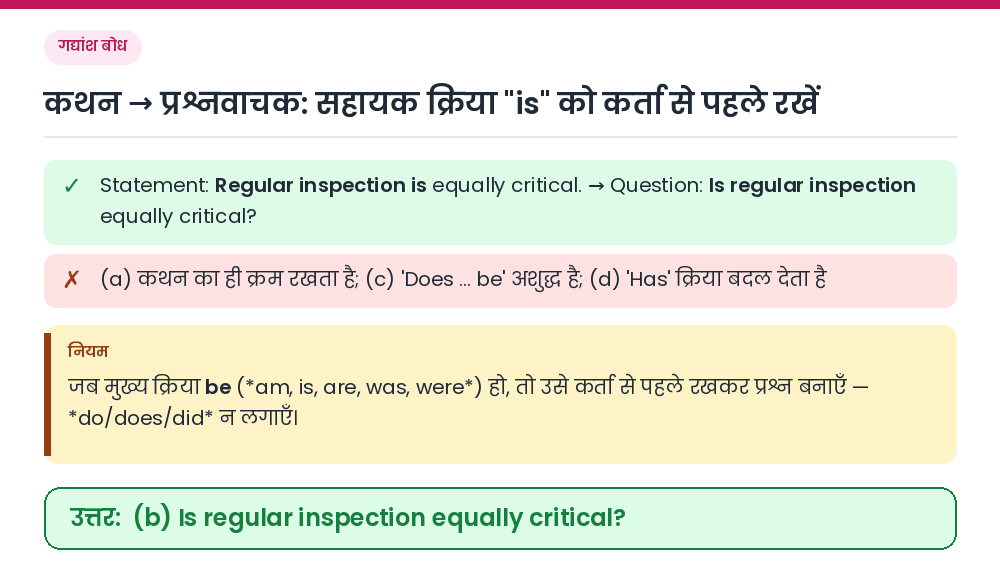
उत्तर: (B) Is regular inspection equally critical?
व्याकरण नियम: जब वाक्य में मुख्य क्रिया 'is/am/are' हो, तो प्रश्नवाचक वाक्य बनाने के लिए क्रिया ('Is') को कर्ता ('regular inspection') से पहले रखा जाता है। रूपांतरण: 'Regular inspection is equally critical.' का प्रश्नवाचक रूप 'Is regular inspection equally critical?' होगा। निरसन: (a) में कर्ता-क्रिया का क्रम नहीं बदला गया, (c) में 'Does ... be' व्याकरणतः गलत है, और (d) में 'Has' गलत है। सही उत्तर: (b) Is regular inspection equally critical?