Civil Services Examination · प्रश्न 104
A parachutist jumps from a height of 5000 metres. The relationship between his falling speed ‘v’ and the distance fallen through ‘d’ is best represented as A.
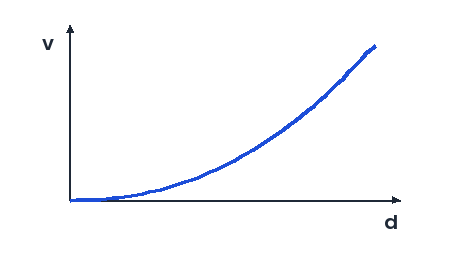
B.
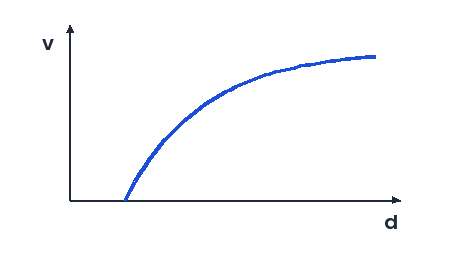
C.
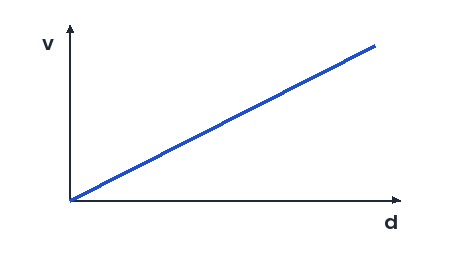
D.
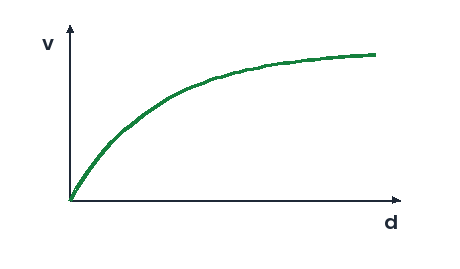
उत्तर देखें और व्याख्याव्याख्या देखें
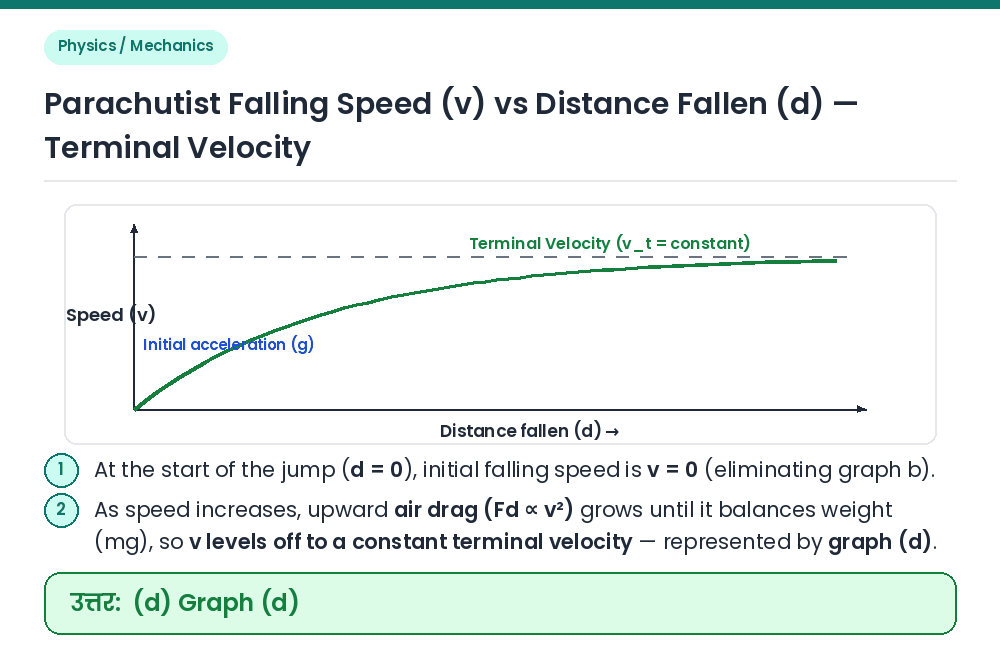
उत्तर: (D) D
Initial Condition at d = 0: When the parachutist jumps from rest at d = 0, his initial falling speed is v = 0, so the curve must start at the origin (0, 0) (which eliminates graph b). Effect of Air Resistance: Initially, gravity accelerates the parachutist downward (so v increases rapidly with d). As speed v increases, upward air drag (proportional to v²) increases until drag equals gravitational weight (mg). Terminal Velocity: Once net force becomes zero, acceleration drops to zero and the falling speed v reaches a constant maximum value called 'terminal velocity'—meaning the v vs d curve flattens out horizontally at large d. Result: Graph (d) starting at the origin and levelling off horizontally best represents the relationship. Related Facts: • In a vacuum (no air resistance), v² = 2gd, which is a parabola opening to the right; in air, viscous drag caps v at terminal velocity. सही उत्तर: (d) Graph (d)