Civil Services Examination · प्रश्न 26
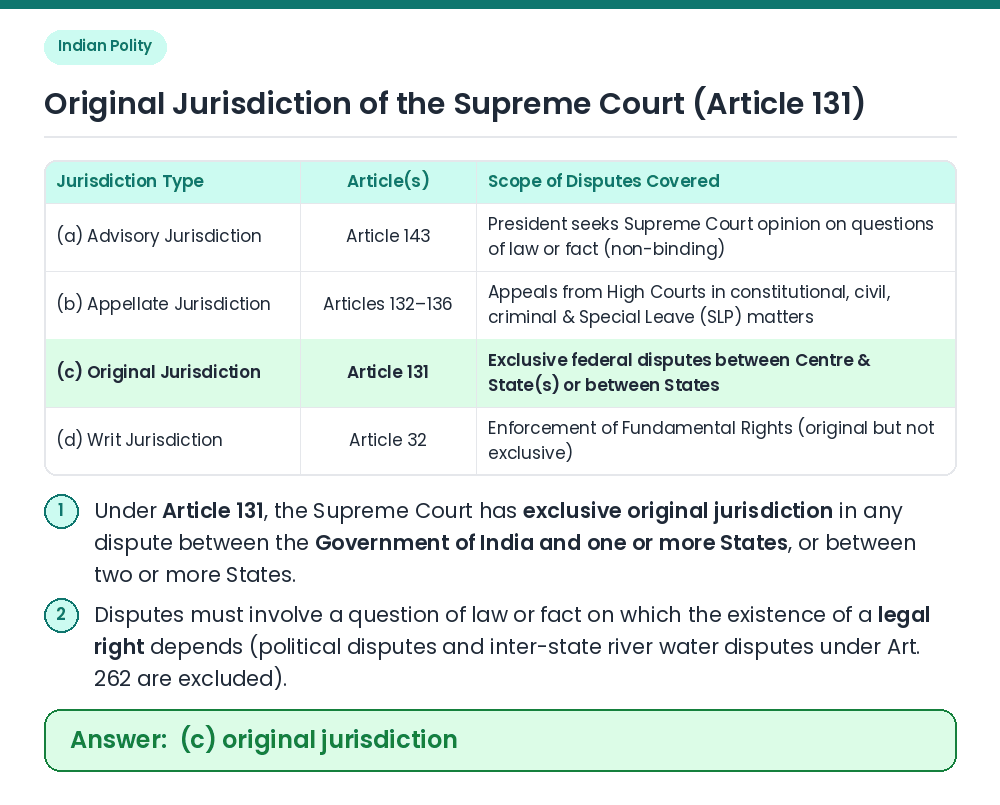
The power of the Supreme Court of India to decide disputes between the Centre and the States falls under its
उत्तर देखें और व्याख्याव्याख्या देखें
उत्तर: (C) original jurisdiction
Concept: Classify the jurisdiction of the Supreme Court of India when acting as a federal court to adjudicate disputes between different units of the Indian federation. Constitutional Provision: ⇒ Under Article 131 of the Constitution, the Supreme Court exercises exclusive original jurisdiction in any dispute: (i) between the Centre and one or more States, (ii) between the Centre and any State(s) on one side and one or more States on the other, or (iii) between two or more States. Distinguish Other Jurisdictions: ⇒ Advisory jurisdiction falls under Article 143 (Presidential reference), while appellate jurisdiction falls under Articles 132–136 (appeals against High Court judgments). Result: The power to decide disputes between the Centre and the States falls under its original jurisdiction. Related Facts: • Exclusive vs Non-Exclusive Original Jurisdiction: Federal disputes under Article 131 are both original and exclusive (only the Supreme Court can hear them), whereas writ jurisdiction under Article 32 is original but concurrent with High Courts (Article 226). • Exclusions from Article 131: Pre-constitutional treaties/covenants (proviso to Art. 131) and inter-state water disputes (Article 262). Correct Answer: (c) original jurisdiction