Civil Services Examination · प्रश्न 35
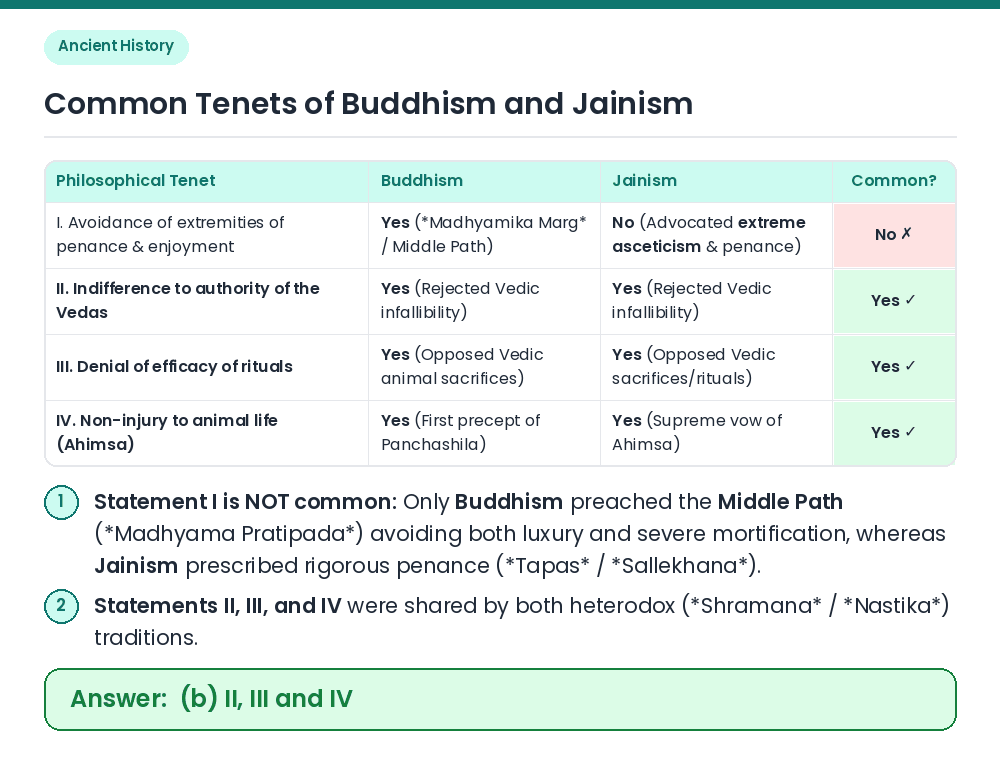
Which of the following were common to both Buddhism and Jainism? I. Avoidance of extremities of penance and enjoyment. II. Indifference to the authority of the Vedas III. Denial of efficacy of rituals IV. Non-injury to animal life Select the correct answer using the codes given below: Codes:
उत्तर देखें और व्याख्याव्याख्या देखें
उत्तर: (B) II, III and IV
Concept: Compare the core ethical and philosophical doctrines of the two major 6th-century BCE Shramana (heterodox) movements — Buddhism and Jainism. Evaluate Statement I: ⇒ Avoidance of extremities of self-mortification (penance) and sensual indulgence is the 'Middle Path' (Madhyama Pratipada) unique to Gautama Buddha; Mahavira and Jainism, by contrast, emphasised severe ascetic penance (Tapas) to purge karmic matter — so I is not common. Evaluate II, III & IV: ⇒ Both religions rejected the divine authority of the Vedas (II), denied the efficacy of Brahmanical sacrifices and rituals (III), and upheld Ahimsa or non-injury to living beings (IV). Result: Statements II, III and IV were common to both Buddhism and Jainism. Related Facts: • Concept of Soul (Atman): Buddhism denied the existence of an eternal, unchanging soul (Anatta/Anatmavada), whereas Jainism believed in eternal souls (Jiva) inhabiting all living and non-living elements. Correct Answer: (b) II, III and IV