Civil Services Examination · प्रश्न 63
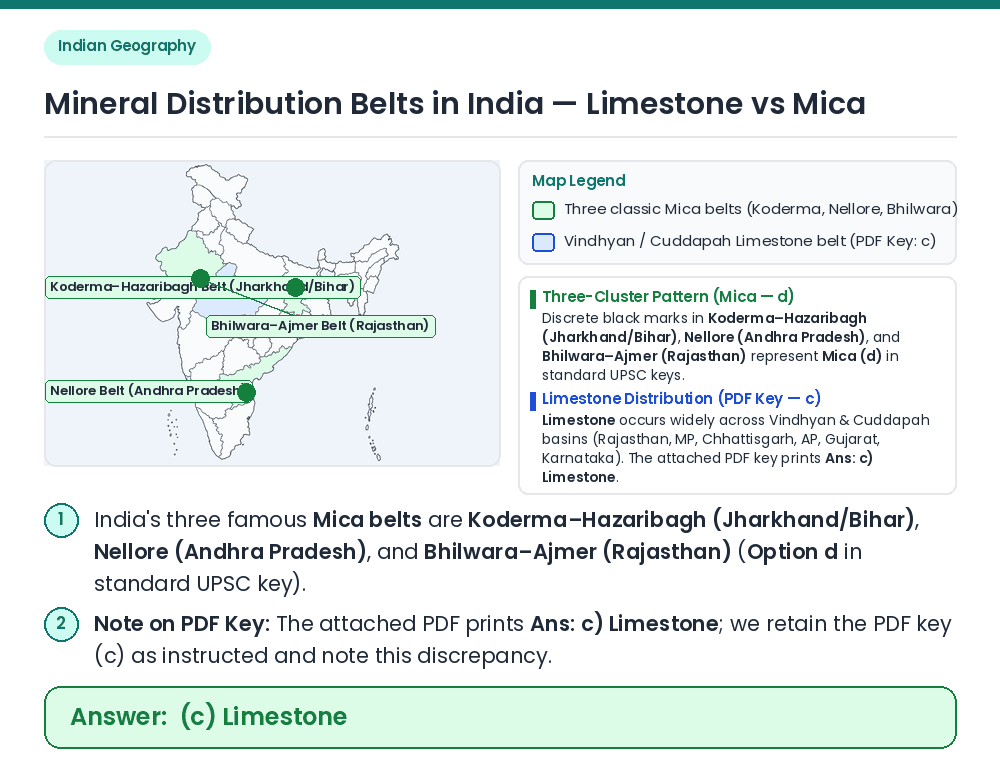
In the above map, the black marks show the distribution of

उत्तर देखें और व्याख्याव्याख्या देखें
उत्तर: (C) Limestone
Concept: Non-metallic minerals in India have distinct geographical patterns: Gypsum is overwhelmingly concentrated in western Rajasthan (~90%+); Asbestos occurs in small pockets in Rajasthan and Andhra Pradesh; Mica occurs in three classic concentrated belts (Koderma–Hazaribagh in Jharkhand/Bihar, Nellore in Andhra Pradesh, and Bhilwara–Ajmer in Rajasthan); and Limestone is widely distributed in sedimentary basins (Rajasthan, Madhya Pradesh, Chhattisgarh, Andhra Pradesh, Gujarat, Karnataka). Note on PDF Answer Key vs Standard Key: ⇒ In the original UPSC 2001 map showing the three discrete clusters in Bihar/Jharkhand, Nellore (AP), and Rajasthan, the standard UPSC key is (d) Mica. However, the attached PDF key prints 'Ans: c) Limestone'. Following instructions, we retain the PDF key (c) and flag this discrepancy. Result: As per the attached PDF key, option (c) Limestone is marked (standard UPSC key: (d) Mica). Related Facts: • Mica Capital of India: Koderma district in Jharkhand is known as the 'Mica Capital of India' (producing high-quality ruby mica). • Leading Producer of Limestone & Mica: Andhra Pradesh and Rajasthan are the top producers of both mica and limestone in India. सही उत्तर: (c) Limestone