UP Super TET · Question 108
The Kailashnath Temple (Shiva Temple) at Kanchipuram containing sculpture with paintings in the inner walls was built by
Show answer & explanationShow explanation
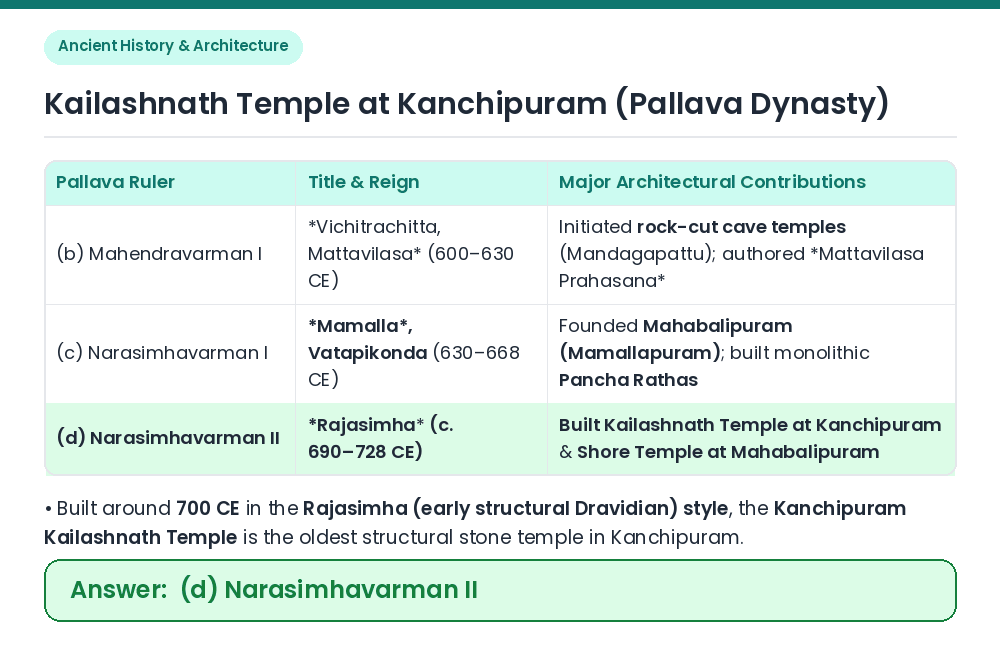
Answer: (D) Narasimhavarman II
The Kailashnath Temple (also called Rajasimheshvara Temple) at Kanchipuram in Tamil Nadu was built by the Pallava king Narasimhavarman II, who held the title 'Rajasimha' (reigned c. 690–728 CE). • Built around 700 CE out of sandstone in the early Dravidian structural style, it is dedicated to Lord Shiva and is famous for its 58 small shrines (devakulikas) lining the inner courtyard wall containing exquisite sculptures and traces of 8th-century murals. • Narasimhavarman II also built the famous Shore Temple at Mahabalipuram (Mamallapuram). Why other options are wrong: • (a) Devavarman: Not a Pallava ruler associated with Kanchipuram's structural temples. • (b) Mahendravarman I (600–630 CE): Pioneered the rock-cut cave temple style in Tamil Nadu and wrote the Sanskrit farce 'Mattavilasa Prahasana'. • (c) Narasimhavarman I 'Mamalla' (630–668 CE): Built the monolithic rock-cut Pancha Rathas (Seven Pagodas) at Mahabalipuram and defeated Chalukya king Pulakeshin II ('Vatapikonda'). Related Facts: • Note the distinction: The Kailashnath Temple at Kanchipuram (structural stone temple) was built by Pallava king Narasimhavarman II, whereas the rock-cut Kailasa Temple at Ellora (Cave 16) was built by Rashtrakuta king Krishna I. • Great Sanskrit poet Dandin (author of 'Dashakumaracharita' and 'Kavyadarsha') adorned the court of Narasimhavarman II. Correct Answer: (d) Narasimhavarman II