RRB NTPC · Question 92
What is the main difference between a Cabinet Minister and a Minister of State with independent charge?
Show answer & explanationShow explanation
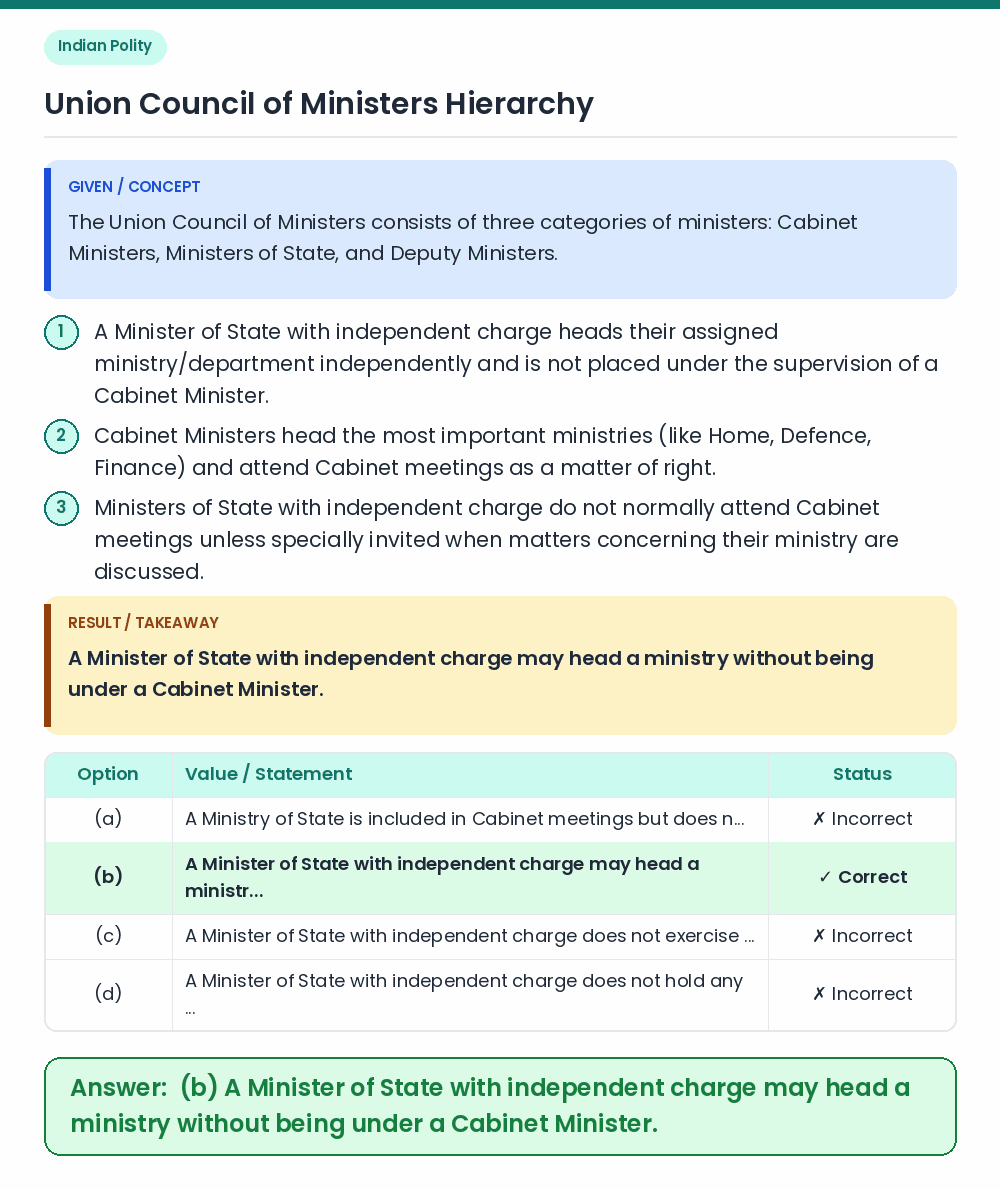
Answer: (B) A Minister of State with independent charge may head a ministry without being under a Cabinet Minister.
• A Minister of State with independent charge may head a ministry without being under a Cabinet Minister. • The Union Council of Ministers consists of three categories of ministers: Cabinet Ministers, Ministers of State, and Deputy Ministers. Related Facts: • A Minister of State with independent charge heads their assigned ministry/department independently and is not placed under the supervision of a Cabinet Minister. • Cabinet Ministers head the most important ministries (like Home, Defence, Finance) and attend Cabinet meetings as a matter of right. • Ministers of State with independent charge do not normally attend Cabinet meetings unless specially invited when matters concerning their ministry are discussed. Correct Answer: (b) A Minister of State with independent charge may head a ministry without being under a Cabinet Minister.