RRB NTPC · Question 61
If the Government of India revokes the citizenship of an individual for acting against the interests of the country, which constitutional or statutory provision empowers it to do so?
Show answer & explanationShow explanation
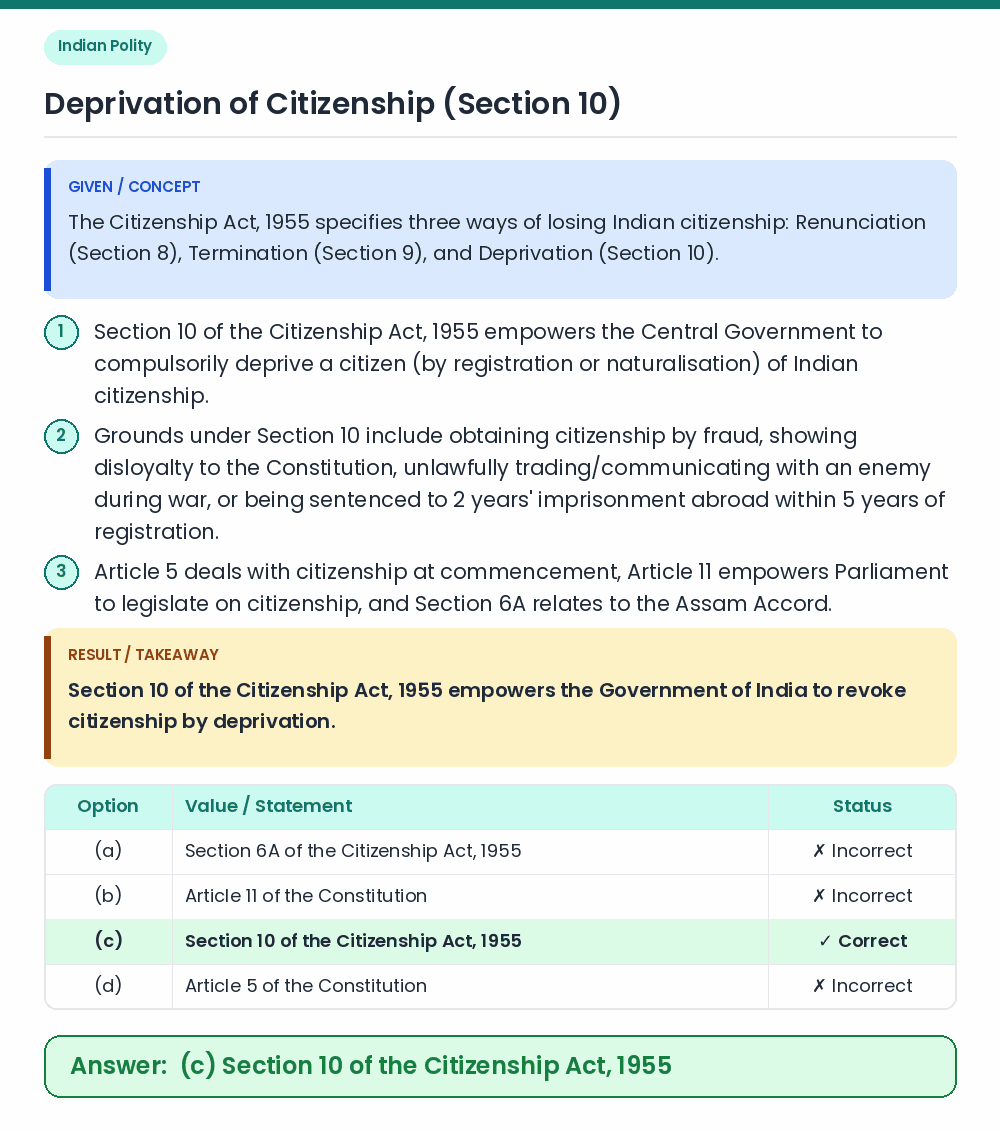
Answer: (C) Section 10 of the Citizenship Act, 1955
• Section 10 of the Citizenship Act, 1955 empowers the Government of India to revoke citizenship by deprivation. • The Citizenship Act, 1955 specifies three ways of losing Indian citizenship: Renunciation (Section 8), Termination (Section 9), and Deprivation (Section 10). Related Facts: • Section 10 of the Citizenship Act, 1955 empowers the Central Government to compulsorily deprive a citizen (by registration or naturalisation) of Indian citizenship. • Grounds under Section 10 include obtaining citizenship by fraud, showing disloyalty to the Constitution, unlawfully trading/communicating with an enemy during war, or being sentenced to 2 years' imprisonment abroad within 5 years of registration. • Article 5 deals with citizenship at commencement, Article 11 empowers Parliament to legislate on citizenship, and Section 6A relates to the Assam Accord. Correct Answer: (c) Section 10 of the Citizenship Act, 1955