RRB NTPC · Question 30
What administrative change characterized the political structure of post-Gupta India?
Show answer & explanationShow explanation
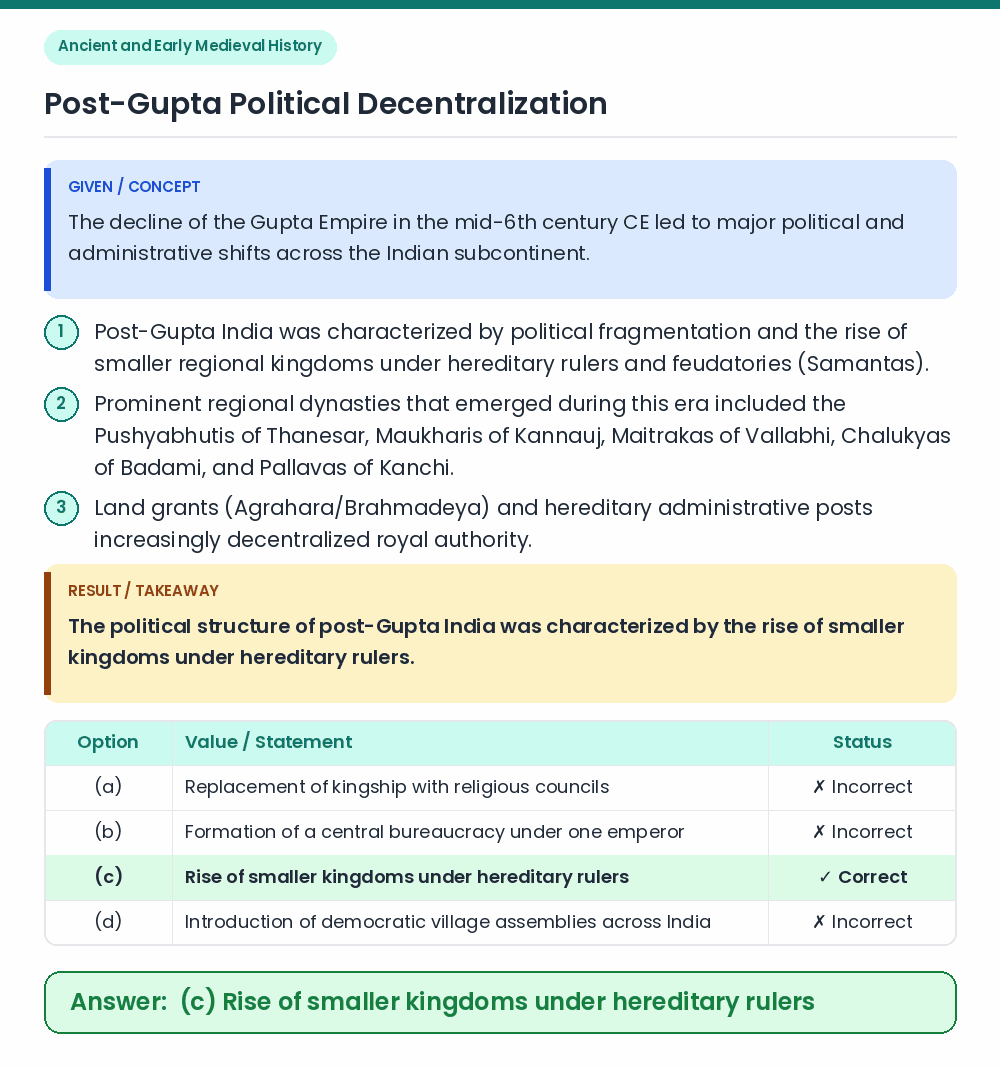
Answer: (C) Rise of smaller kingdoms under hereditary rulers
• The political structure of post-Gupta India was characterized by the rise of smaller kingdoms under hereditary rulers. • The decline of the Gupta Empire in the mid-6th century CE led to major political and administrative shifts across the Indian subcontinent. Related Facts: • Post-Gupta India was characterized by political fragmentation and the rise of smaller regional kingdoms under hereditary rulers and feudatories (Samantas). • Prominent regional dynasties that emerged during this era included the Pushyabhutis of Thanesar, Maukharis of Kannauj, Maitrakas of Vallabhi, Chalukyas of Badami, and Pallavas of Kanchi. • Land grants (Agrahara/Brahmadeya) and hereditary administrative posts increasingly decentralized royal authority. Correct Answer: (c) Rise of smaller kingdoms under hereditary rulers