SSC CHSL – Combined Higher Secondary (10+2) Level Examination · Question 7
Identify the voice in “What began as a strategic model of warfare”. Read the passage and answer the following question: India’s relationship with chess is tightly bound to its cultural legacy, as the game—first known as “chaturanga”—originated on the subcontinent more than a thousand years ago. What began as a strategic model of warfare gradually transformed into shatranj under Persian influence and then travelled west, eventually taking the form of modern chess. In contemporary times, India’s rise on the world chess stage was propelled by the meteoric emergence of Viswanathan Anand in the late 20th century. His smooth, dynamic approach—blending tactical sharpness with positional understanding—brought him the World Chess Championship on multiple occasions and motivated an entire generation of players. Anand’s achievements also encouraged stronger institutional support, resulting in a surge of tournaments, academies, and grassroots programmes across the country. The 21st century has seen prodigies like Rameshbabu Praggnanandhaa, D. Gukesh, and Nihal Sarin excel internationally, strengthening India’s reputation as a major contender in team events such as the Chess Olympiad. At the same time, digital platforms have accelerated player development by allowing young talents to train and compete with grandmasters worldwide, sharpening their strategic acumen from an early age. Today, India is not only recognised as the birthplace of chess but also as a key force influencing its global future. This journey—from ancient invention to modern innovation—highlights the nation’s lasting and evolving contribution to the chess world.
Show answer & explanationShow explanation
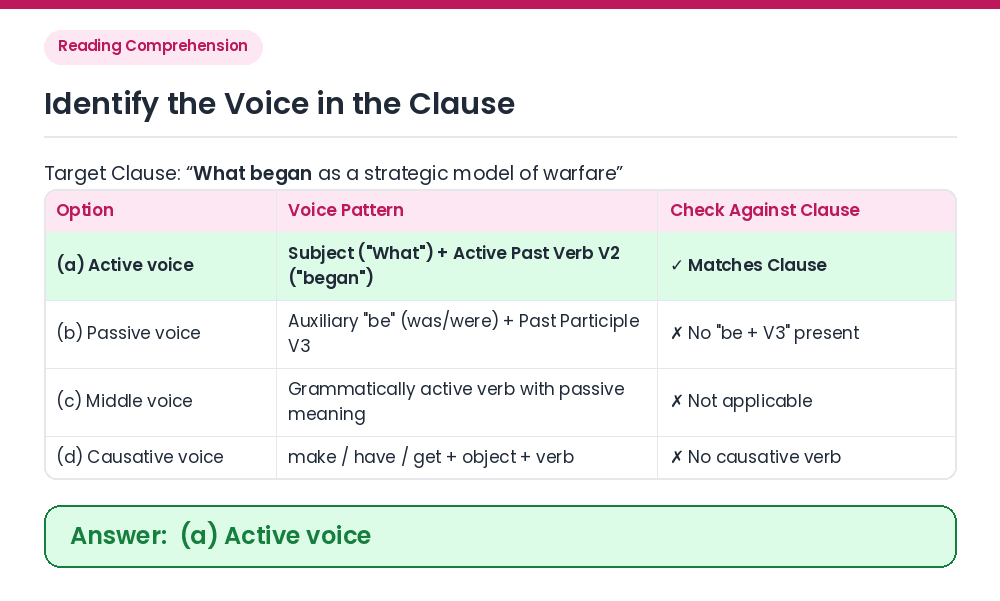
Answer: (A) Active voice
Analyze the Verb Form: In the clause "What began as a strategic model of warfare", the subject is the relative pronoun "What" and the main verb is "began" (Simple Past / V2 of 'begin'). Check Active vs. Passive: Passive voice requires a form of the auxiliary verb 'to be' (was/were) followed by a past participle (V3, 'begun'). Here, the subject directly performs the action using the active past verb "began". Conclusion: The clause is in the active voice. Correct Answer: (a) Active voice