MPPSC – State Service Examination · Question 18
Who was the Father of Local Self-Government in India?
Show answer & explanationShow explanation
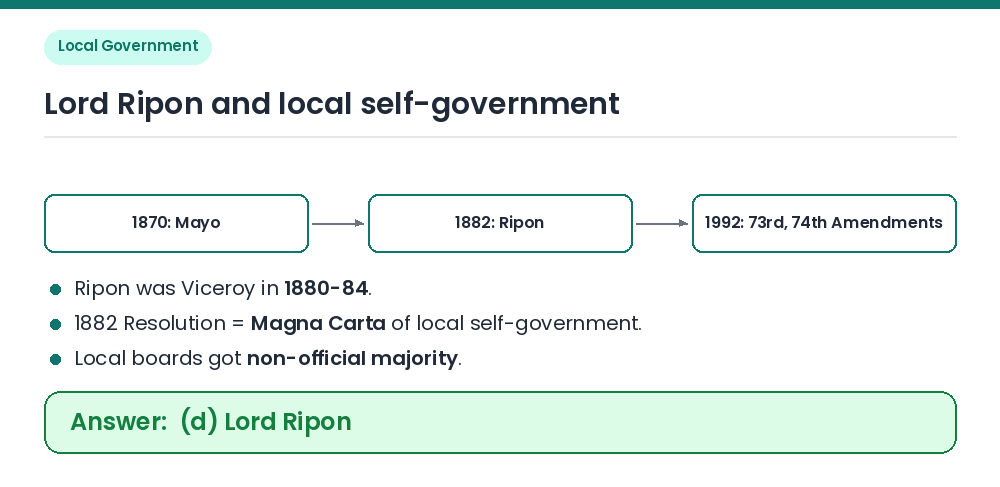
Answer: (D) Lord Ripon
Lord Ripon is called the Father of Local Self-Government in India. He was Viceroy from 1880 to 1884 and passed the Resolution on Local Self-Government on 18 May 1882. It set up local boards in districts and towns with a majority of non-official members and, where possible, elected chairmen; this resolution is called the Magna Carta of local self-government. (a) Lord Dalhousie (1848-56) is known for the Doctrine of Lapse, railways and the telegraph. (b) Lord Mountbatten was the last Viceroy and the first Governor-General of free India. (c) Lord Macaulay wrote the Minute on Education (1835) and drafted the Indian Penal Code. Related Facts: • Ripon repealed the Vernacular Press Act in 1882. • The Hunter Commission on education (1882) was appointed in his time. • The Ilbert Bill controversy (1883) also took place under Ripon. • Lord Mayo's Resolution of 1870 began financial decentralisation. Correct Answer: (d) Lord Ripon