Civil Services Examination · Question 104
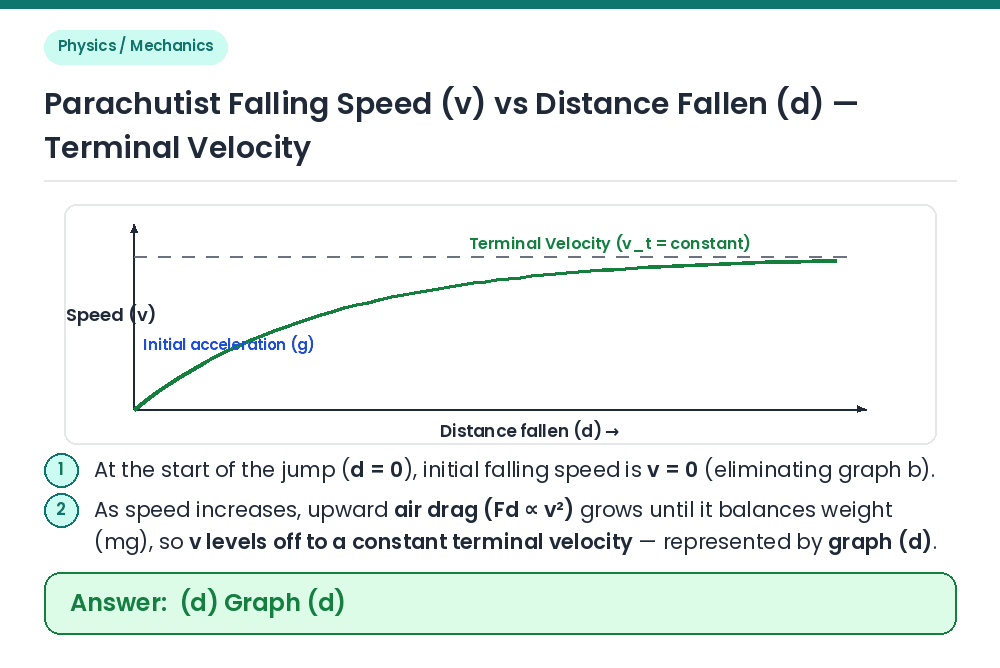
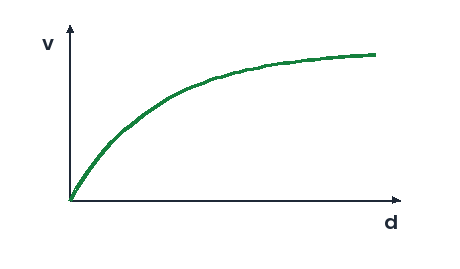
A parachutist jumps from a height of 5000 metres. The relationship between his falling speed ‘v’ and the distance fallen through ‘d’ is best represented as A.
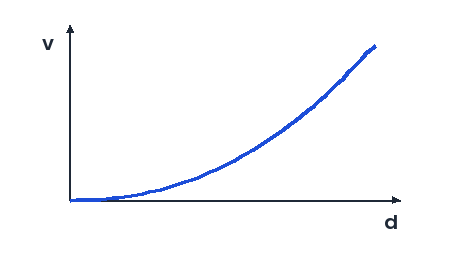
B.
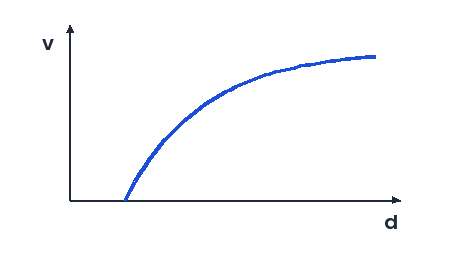
C.
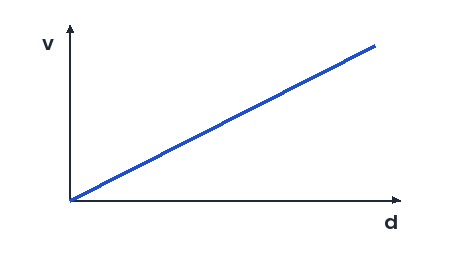
D.
Show answer & explanationShow explanation
Answer: (D) D
Initial Condition at d = 0: When the parachutist jumps from rest at d = 0, his initial falling speed is v = 0, so the curve must start at the origin (0, 0) (which eliminates graph b). Effect of Air Resistance: Initially, gravity accelerates the parachutist downward (so v increases rapidly with d). As speed v increases, upward air drag (proportional to v²) increases until drag equals gravitational weight (mg). Terminal Velocity: Once net force becomes zero, acceleration drops to zero and the falling speed v reaches a constant maximum value called 'terminal velocity'—meaning the v vs d curve flattens out horizontally at large d. Result: Graph (d) starting at the origin and levelling off horizontally best represents the relationship. Related Facts: • In a vacuum (no air resistance), v² = 2gd, which is a parabola opening to the right; in air, viscous drag caps v at terminal velocity. Correct Answer: (d) Graph (d)