Civil Services Examination · Question 120
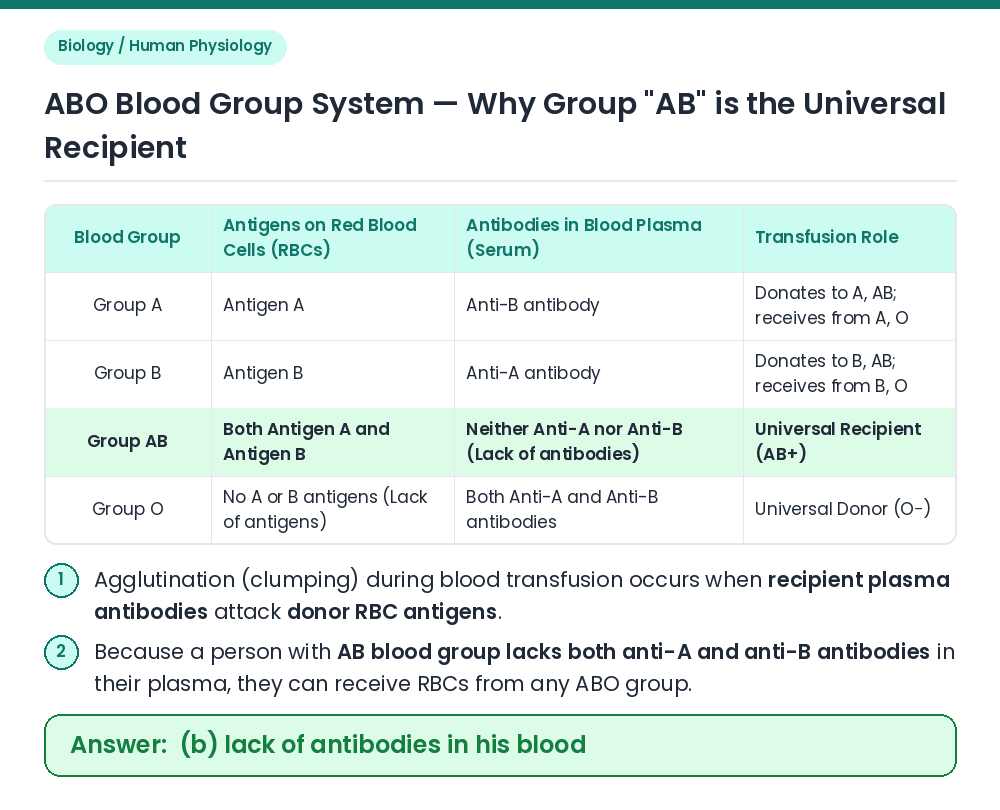
A person with ‘AB’ blood group is sometimes called a universal recipient because of the
Show answer & explanationShow explanation
Answer: (B) lack of antibodies in his blood
Concept: In Karl Landsteiner's ABO blood grouping system, red blood cell (RBC) membranes carry glycoprotein antigens (A and/or B), while blood plasma carries corresponding antibodies (anti-A and/or anti-B). Antigen–Antibody Profile of AB: Individuals with blood group AB possess both A and B antigens on the surface of their RBCs, but have a complete lack of anti-A and anti-B antibodies in their blood plasma. Transfusion Consequence: Because there are no anti-A or anti-B antibodies in the recipient's plasma to clump incoming donor red blood cells, an AB+ individual is called a 'universal recipient'. Result: Group AB is a universal recipient because of the lack of antibodies in his blood. Related Facts: • Conversely, blood group O (specifically O Rh-negative) is the 'universal donor' because its RBCs lack A, B, and Rh antigens. Correct Answer: (b) lack of antibodies in his blood