Civil Services Examination · Question 30
According to the World Health Organisation, the disease which causes the death of the largest number of people today is
Show answer & explanationShow explanation
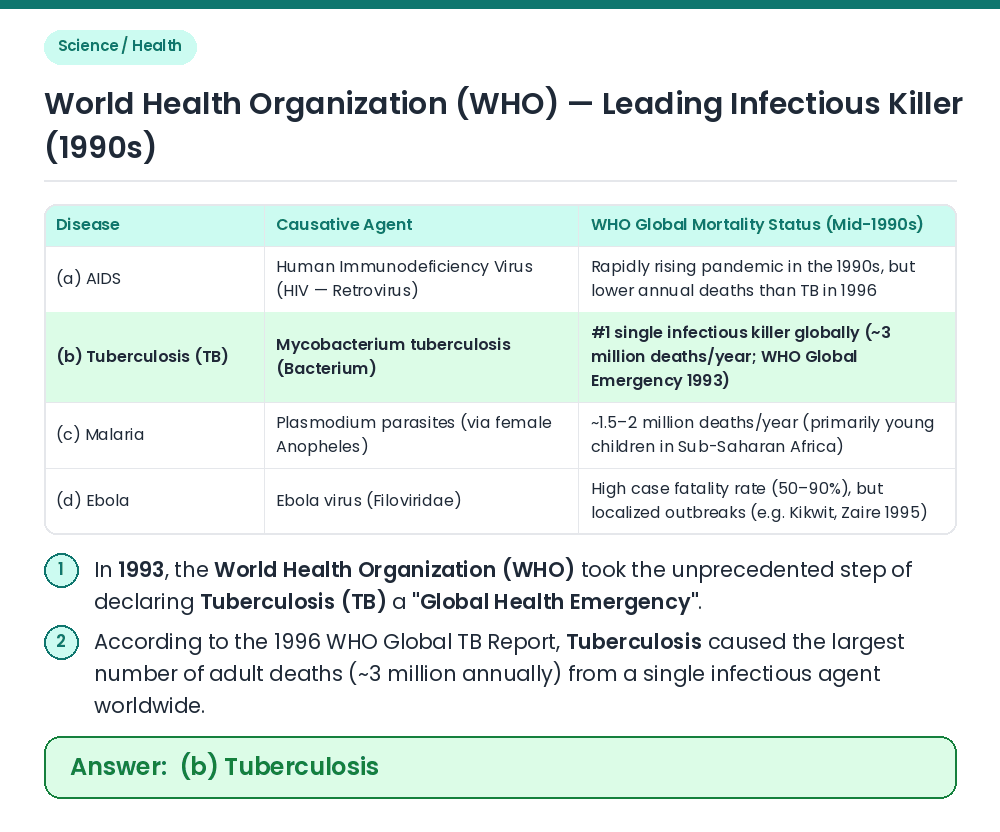
Answer: (B) Tuberculosis
Concept: Identify the single infectious disease reported by the World Health Organization (WHO) in the mid-1990s as the leading global killer. WHO Global Assessment: ⇒ In April 1993, WHO declared Tuberculosis (TB) a 'global health emergency' and in its 1995–96 reports highlighted that TB killed nearly 3 million people annually — more than any other single infectious disease. Compare Other Diseases: ⇒ Malaria caused roughly 1.5–2 million deaths annually, HIV/AIDS mortality was lower than TB in 1996, and Ebola caused localized outbreaks (such as the 1995 Kikwit outbreak in Zaire). Result: Tuberculosis is the disease causing the death of the largest number of people according to WHO. Related Facts: • DOTS Strategy (1995): WHO launched the Directly Observed Treatment, Short-course (DOTS) strategy to combat the global TB epidemic. • World TB Day: Observed annually on 24 March to commemorate Dr. Robert Koch's discovery of Mycobacterium tuberculosis on 24 March 1882. Correct Answer: (b) Tuberculosis