Civil Services Examination · Question 123
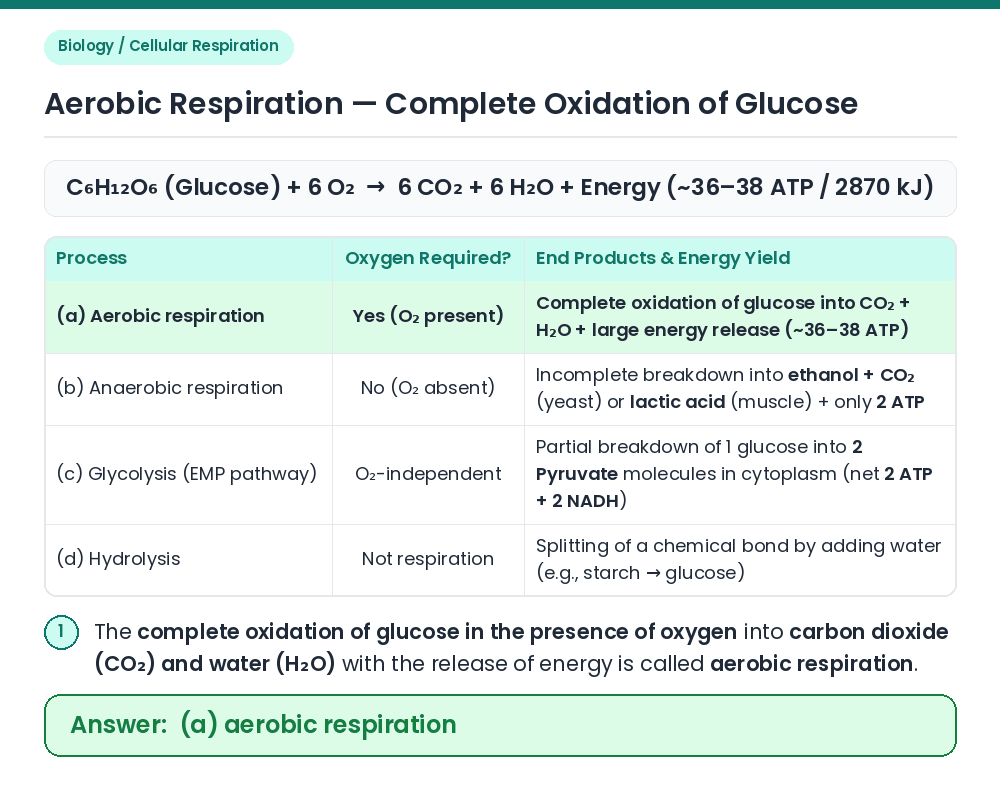
The complete conversion of glucose in the presence of oxygen into carbon dioxide and water with release of energy is called:
Show answer & explanationShow explanation
Answer: (A) aerobic respiration
Given / Concept: Cellular respiration is the catabolic pathway by which living cells oxidize glucose to generate energy in the form of ATP. Reaction in Presence of Oxygen: C₆H₁₂O₆ + 6O₂ → 6CO₂ + 6H₂O + Energy (~36–38 ATP). Because this complete oxidation requires molecular oxygen (O₂) and proceeds through glycolysis (cytoplasm), the Krebs cycle (mitochondrial matrix), and the electron transport chain (inner mitochondrial membrane), it is termed aerobic respiration. Elimination: Anaerobic respiration occurs without oxygen (yielding lactic acid or ethanol + 2 ATP); glycolysis only converts glucose to pyruvate. Result: The complete conversion of glucose in the presence of oxygen into CO₂ and water with energy release is called aerobic respiration. Related Facts: • Powerhouse of the Cell: While glycolysis occurs in the cytosol, the Krebs (citric acid) cycle and oxidative phosphorylation occur inside the mitochondria. Correct Answer: (a) aerobic respiration