Civil Services Examination · Question 41
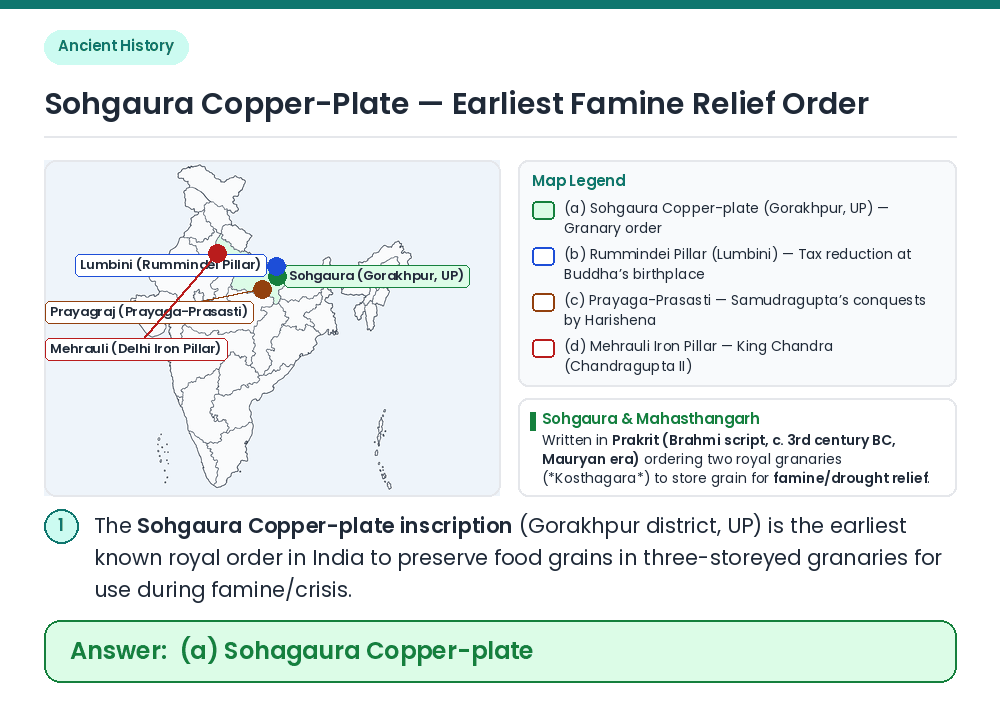
Which one of the following ancient Indian records is the earliest royal order to preserve food grains to be utilised during the crises in the country?
Show answer & explanationShow explanation
Answer: (A) Sohagaura Copper-plate
Given / Concept: Look for the earliest epigraphic record in ancient India dealing with state granaries and famine relief during times of distress. Sohgaura Copper-plate: Discovered at Sohgaura in Gorakhpur district (Uttar Pradesh) and written in Prakrit in the Mauryan Brahmi script (3rd century BC), it depicts two royal storehouses (Kosthagara) and orders officials to distribute preserved grain only during famine or drought. Elimination: Rummindei pillar edict records Ashoka's visit to Lumbini and tax reduction (to 1/8th); Prayaga-Prasasti eulogizes Samudragupta's conquests; Mehrauli Iron Pillar celebrates King Chandra's victories. Result: The Sohagaura Copper-plate is the earliest royal order to preserve food grains for crises. Related Facts: • Mahasthangarh Limestone Plaque (Bogra, Bangladesh): Another Mauryan-era Brahmi inscription that likewise orders distribution of paddy and coins from the royal granary at Pundranagara during emergencies. • Kautilya's Arthashastra: Also prescribes earmarking half of the state's collected grain reserves in the Kosthagara specifically for public famine relief. Correct Answer: (a) Sohagaura Copper-plate