Civil Services Examination · Question 135
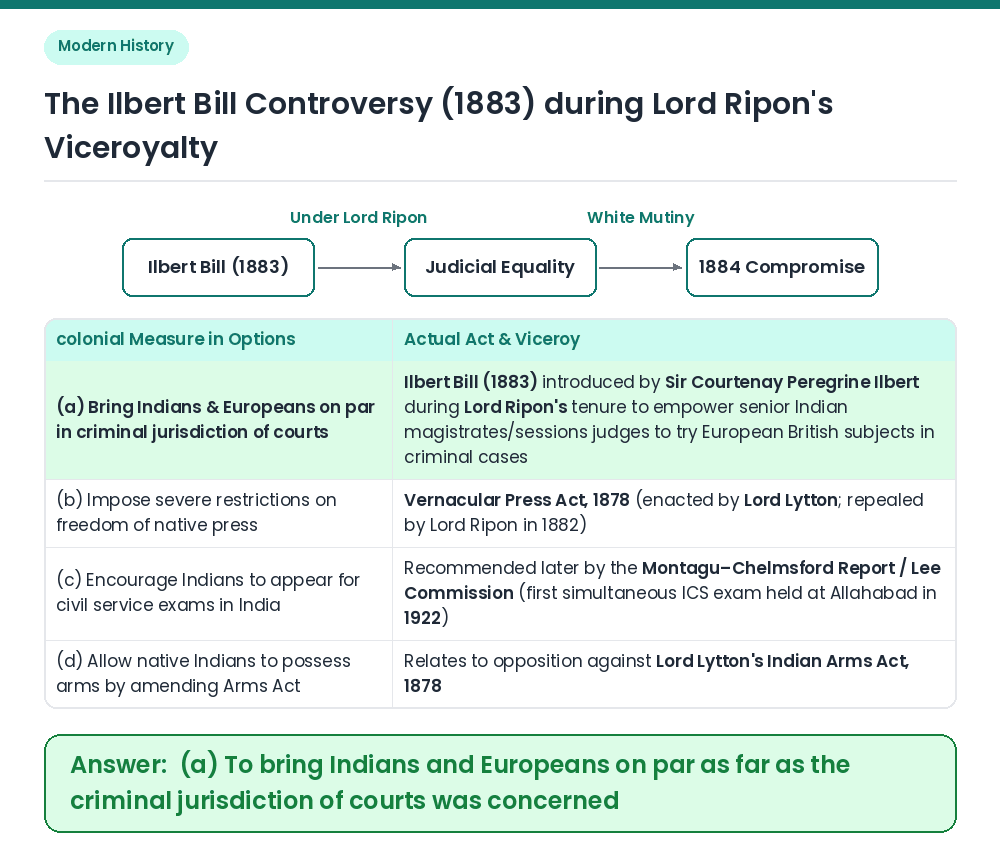
With reference to colonial rule in India, what was sought by the Ilbert Bill in 1883?
Show answer & explanationShow explanation
Answer: (A) To bring Indians and Europeans on par as far as the criminal jurisdiction of courts was concerned
Concept: Examine the purpose of the Ilbert Bill introduced in 1883 during the viceroyalty of Lord Ripon (1880–1884). Identify purpose of Ilbert Bill: Drafted by Sir Courtenay Peregrine Ilbert (Law Member of the Viceroy's Council), the Ilbert Bill of 1883 sought to remove the racial disqualification in the Code of Criminal Procedure by empowering senior Indian covenanted Session Judges and District Magistrates in the mofussil (countryside) to try European British subjects in criminal cases, bringing Indian and European judges on par. Eliminate other options: Option (b) describes Lytton's Vernacular Press Act (1878); option (d) relates to Lytton's Arms Act (1878). Result: The Ilbert Bill sought to bring Indians and Europeans on par as far as the criminal jurisdiction of courts was concerned. Related Facts: • 'White Mutiny' & Compromise (1884): Fierce agitation by European planters and residents forced Lord Ripon to accept a compromise whereby Europeans tried by an Indian judge could claim a jury of which at least half the members had to be European or American. Correct Answer: (a) To bring Indians and Europeans on par as far as the criminal jurisdiction of courts was concerned