Civil Services Examination · Question 55
There are only two known examples of cave paintings of the Gupta period in ancient India. One of these is paintings of Ajanta caves. Where is the other surviving example of Gupta paintings?
Show answer & explanationShow explanation
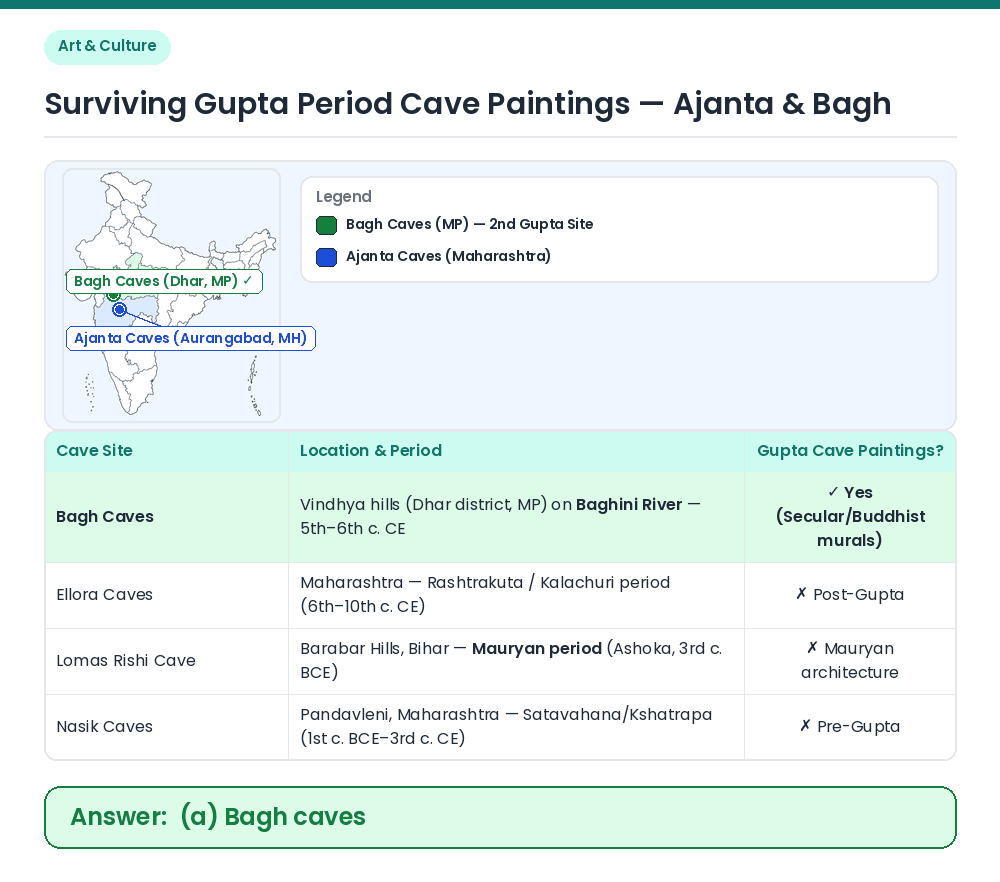
Answer: (A) Bagh caves
Concept: The Gupta age (4th–6th century CE) represents the classical zenith of ancient Indian mural painting (fresco-secco/tempera technique). Identify the Second Site: Besides the Buddhist murals at Ajanta Caves (Maharashtra), the only other surviving example of Gupta-era cave paintings is found at the Bagh Caves in Dhar district of Madhya Pradesh. Eliminate Other Options: Lomas Rishi cave (Bihar) is a Mauryan rock-cut chaitya arch without Gupta murals; Nasik caves (Pandavleni) are pre-Gupta Hinayana caves; Ellora caves are post-Gupta (Rashtrakuta/Chalukya). Result: The other surviving example of Gupta paintings is in the Bagh caves. Related Facts: • Located on the banks of the Baghini river in the southern slopes of the Vindhyas, the Bagh caves comprise 9 rock-cut Buddhist viharas (especially Cave 4, the 'Rang Mahal'). • The famous 'Padmapani' and 'Vajrapani' Bodhisattva paintings belong to Cave 1 of Ajanta. Correct Answer: (a) Bagh caves