Civil Services Examination · Question 37
Which one of the following describes best the concept of Nirvana in Buddhism?
Show answer & explanationShow explanation
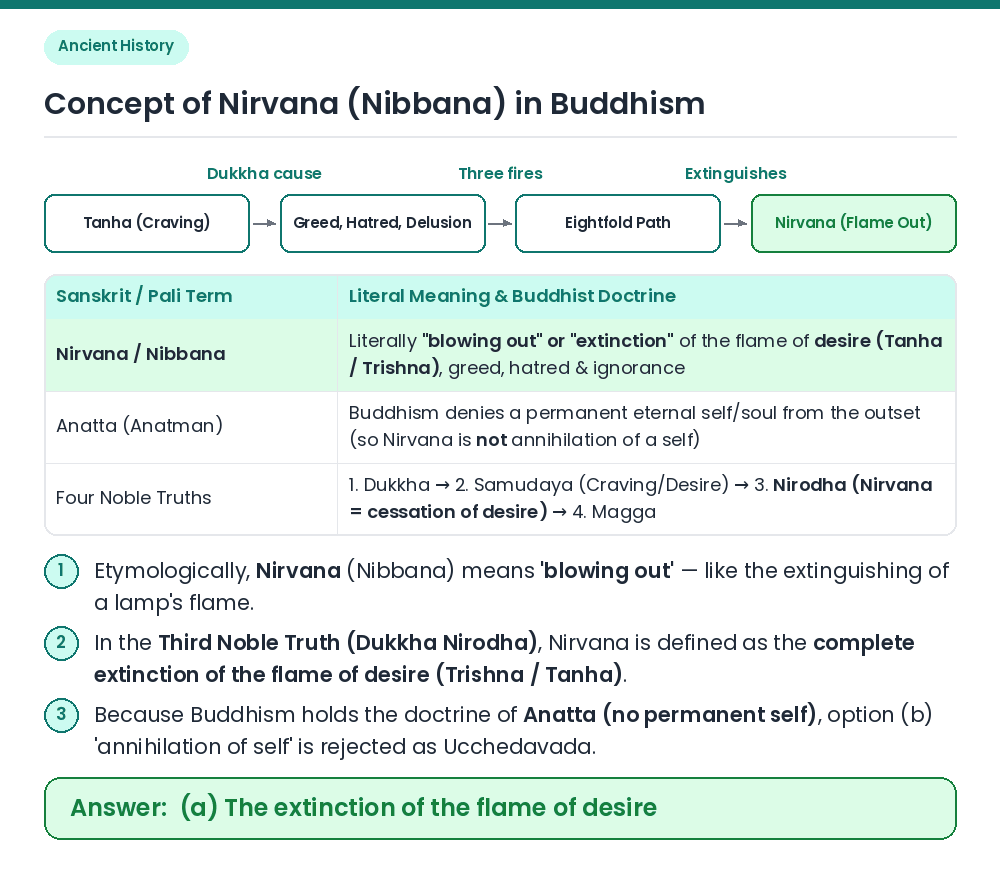
Answer: (A) The extinction of the flame of desire
Concept: In Buddhist philosophy, the word 'Nirvana' (Pali: Nibbana) literally means 'blowing out' or 'extinguishing' (as of a fire). Connection to Four Noble Truths: According to the Second and Third Noble Truths, the root cause of suffering (Dukkha) is craving or desire (Tanha/Trishna) along with the three fires of greed (raga), aversion (dvesha) and delusion (moha). Nirvana is the extinction of this flame of desire, which liberates one from the cycle of rebirth (samsara). Why Other Options Fail: Buddhism rejects both eternalism (Sassatavada) and annihilationism of self (Ucchedavada, option b), since it holds the doctrine of Anatta (non-self). Result: 'The extinction of the flame of desire' best describes the concept of Nirvana in Buddhism. Related Facts: • Attainment in Life: Unlike Moksha in several other traditions, Nirvana in Buddhism can be attained during one's present lifetime (Sopadhishesha Nirvana), while final passing away of an enlightened one is Mahaparinirvana. • Fire Sermon (Adittapariyaya Sutta): The Buddha compared the senses and passions to a burning fire that must be extinguished. Correct Answer: (a) The extinction of the flame of desire