Civil Services Examination · Question 49
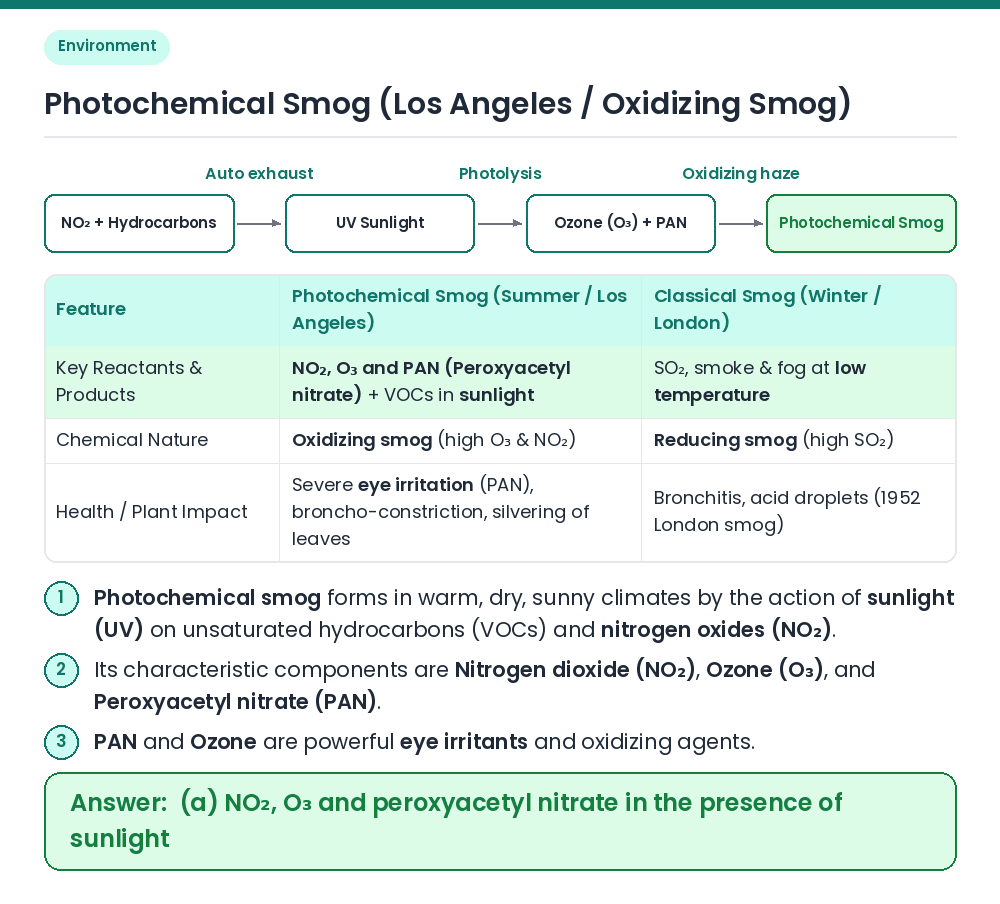
Photochemical smog is a resultant of the reaction among
Show answer & explanationShow explanation
Answer: (A) NO₂, O₃ and peroxyacetyl nitrate in the presence of sunlight
Concept: Photochemical smog (also called Los Angeles smog or oxidizing smog) occurs in warm, dry and sunny climates with heavy vehicular traffic. Photochemical Mechanism: In the presence of strong sunlight (UV radiation), nitrogen dioxide (NO₂) undergoes photolysis into nitric oxide (NO) and nascent oxygen (O), which combines with O₂ to form tropospheric ozone (O₃). Ozone and free radicals react with unburnt hydrocarbons (VOCs) and NO₂ to form peroxyacetyl nitrate (PAN), acrolein and formaldehyde. Identify Key Components: Thus, photochemical smog involves the reaction among NO₂, O₃ and peroxyacetyl nitrate (PAN) in the presence of sunlight. Result: Option (a) is correct. Related Facts: • Oxidizing vs Reducing Smog: Photochemical smog has a high concentration of oxidizing agents (O₃, NO₂, PAN) and is called oxidizing smog, whereas London smog (SO₂ + fog in winter) is reducing smog. • Effects of PAN: Peroxyacetyl nitrate is a potent lachrymator (eye irritant) and damages plant chloroplasts. Correct Answer: (a) NO₂, O₃ and peroxyacetyl nitrate in the presence of sunlight