Civil Services Examination · Question 1
With reference to Mughal India, what is/are the difference/differences between Jagirdar and Zamindar? 1. Jagirdars were holders of land assignments in lieu of judicial and police duties, whereas Zamindars were holders of revenue rights without obligation to perform any duty other than revenue collection. 2. Land assignments to Jagirdars were hereditary and revenue rights of Zamindars were not hereditary. Select the correct answer using the code given below.
Show answer & explanationShow explanation
Answer: (D) Neither 1 nor 2
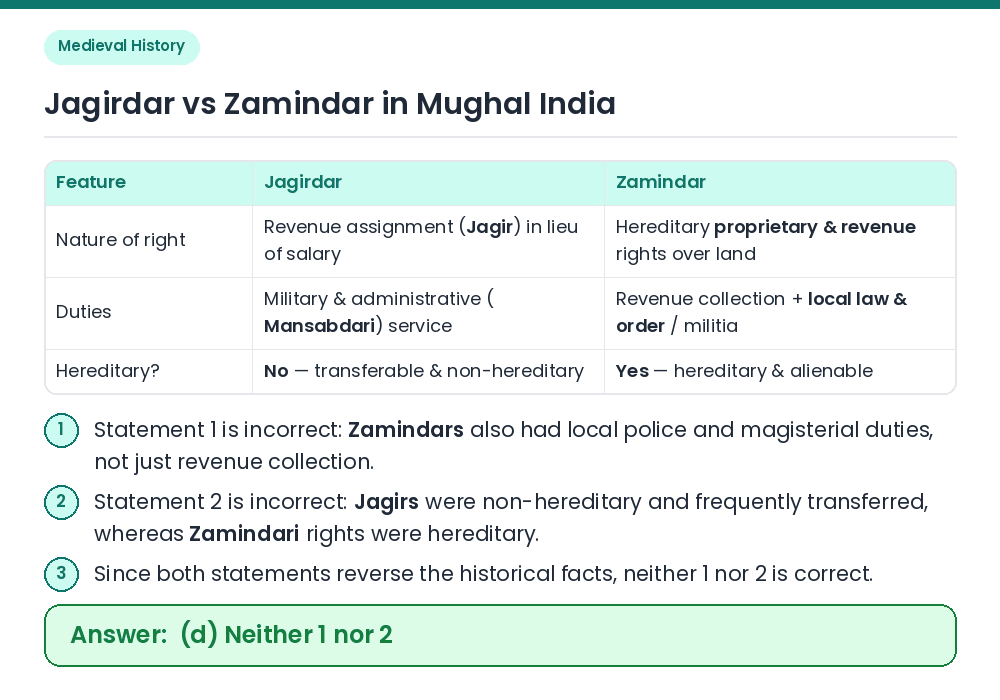
Given / Concept: In the Mughal agrarian system, Jagirdars were state officials (Mansabdars) paid through revenue assignments (Jagirs), whereas Zamindars were local hereditary landholders. Statement 1 Check: Mansabdars/Jagirdars held jagirs in lieu of military and administrative salary ⇒ Zamindars also had obligations to maintain local law and order and supply troops, so Statement 1 is incorrect. Statement 2 Check: Jagirs were non-hereditary and regularly transferred every 3–4 years ⇒ Zamindari rights were hereditary and saleable, so Statement 2 is also incorrect. Result: Neither Statement 1 nor Statement 2 is correct. Related Facts: • Khalisa Land: Revenue from Khalisa land went directly to the imperial Mughal treasury. • Inam / Madad-i-Maash: Revenue-free land grants given to religious scholars and charitable institutions. Correct Answer: (d) Neither 1 nor 2