Civil Services Examination · Question 28
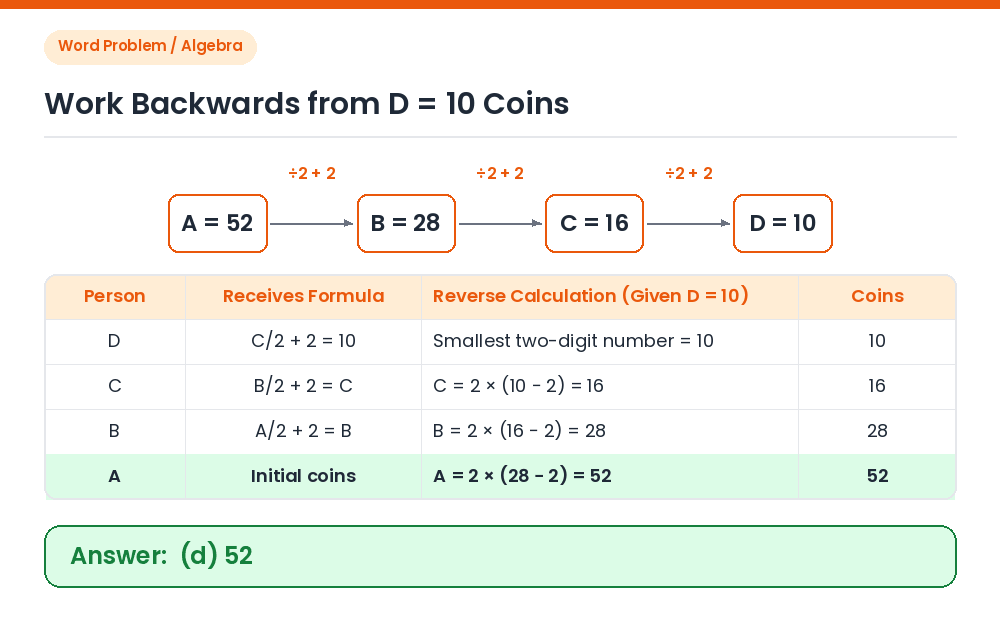
A has some coins. He gives half of the coins and 2 more to B. B gives half of the coins and 2 more to C. C gives half of the coins and 2 more to D. The number of coins D has now, is the smallest two-digit number. How many coins does A have in the beginning?
Show answer & explanationShow explanation
Answer: (D) 52
Given: Each person gives (half of their coins + 2) to the next person. D receives the smallest two-digit number of coins, so D = 10. Coins with C: C gave (C/2 + 2) coins to D ⇒ C/2 + 2 = 10 ⇒ C/2 = 8 ⇒ C = 16. Coins with B: B gave (B/2 + 2) coins to C ⇒ B/2 + 2 = 16 ⇒ B/2 = 14 ⇒ B = 28. Result: A gave (A/2 + 2) coins to B ⇒ A/2 + 2 = 28 ⇒ A/2 = 26 ⇒ A = 52. Correct Answer: (d) 52