UP Super TET · Question 24
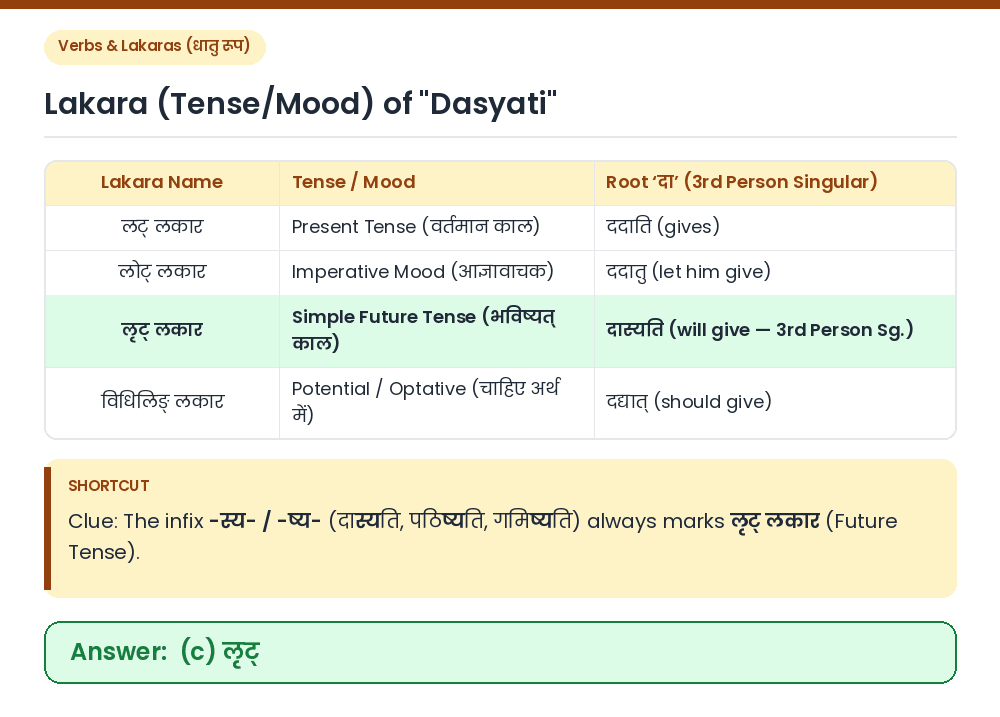
‘दास्यति’ क्रियापद में लकार है
Show answer & explanationShow explanation
Answer: (C) लृट्
Rule: In Sanskrit grammar, Lrit Lakara (लृट् लकार) expresses the simple future tense ('लृट् शेषे च') and is formed by adding the suffix '-स्य-' / '-इष्य-' before the personal endings (ति, तः, न्ति...). Application: The verb 'दास्यति' comes from the root 'दा' (दाणँ दाने — to give) in Lrit Lakara (Future Tense), Prathama Purusha (third person), Ekavachana (singular): दास्यति, दास्यतः, दास्यन्ति ('he/she will give'). Why other options are wrong: • (a) लट् (Present Tense): The form of 'दा' in Lat Lakara is 'ददाति' (ददाति, दत्तः, ददति). • (b) लोट् (Imperative Mood): The form in Lot Lakara is 'ददातु'. • (d) विधिलिङ् (Optative/Potential Mood): The form in Vidhiling Lakara is 'दद्यात्'. Correct Answer: (c) लृट्