Civil Services Examination · Question 81
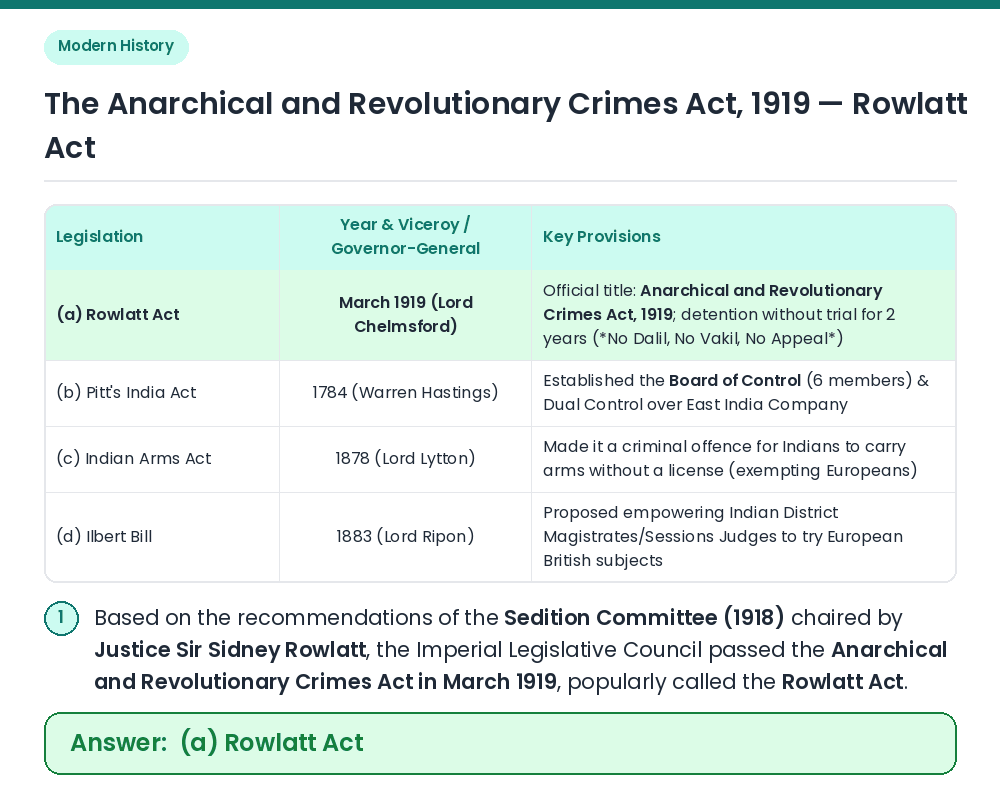
The Anarchical and Revolutionary Crime Act (1919) was popularly known as the
Show answer & explanationShow explanation
Answer: (A) Rowlatt Act
Concept: Recall the official statutory title of the repressive 1919 colonial law that triggered Mahatma Gandhi's first all-India Satyagraha. Identify the Act: ⇒ In March 1919, despite the unanimous opposition of every elected Indian member of the Imperial Legislative Council, the British Government enacted the 'Anarchical and Revolutionary Crimes Act, 1919' on the recommendations of the Rowlatt (Sedition) Committee. Popular Name & Impact: ⇒ Popularly known as the 'Rowlatt Act' (and condemned as the 'Black Act' with the slogan 'No Dalil, No Vakil, No Appeal'), it authorised preventive detention of political suspects without trial for up to two years. Result: The Anarchical and Revolutionary Crimes Act (1919) was popularly known as the Rowlatt Act. Related Facts: • Resignations from Imperial Legislative Council (1919): Mohammed Ali Jinnah, Madan Mohan Malaviya, and Mazhar ul Haque resigned from the Council in protest against the Rowlatt Act. • Rowlatt Satyagraha & Jallianwala Bagh (April 1919): Nationwide protests against the Act culminated in the Jallianwala Bagh massacre in Amritsar on 13 April 1919. Correct Answer: (a) Rowlatt Act