Civil Services Examination · Question 26
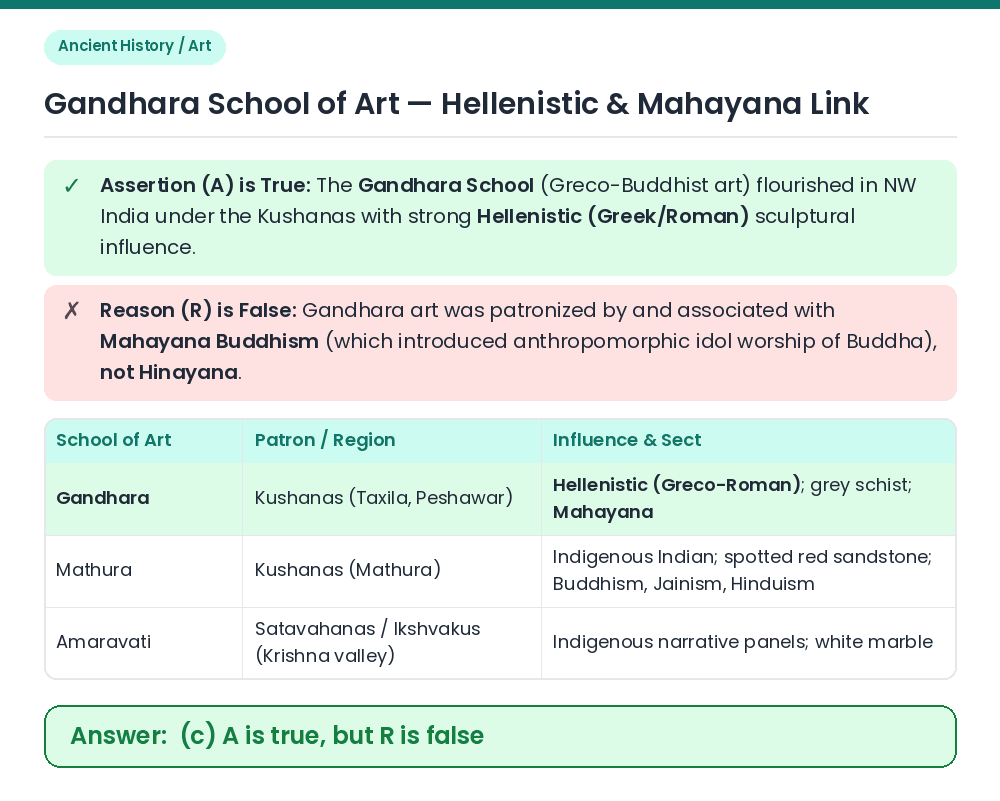
Assertion (A): The Gandhara School of art bears the mark of Hellenistic influence. Reason (R): Hinayana form was influenced by that art.
Show answer & explanationShow explanation
Answer: (C) A is true, but R is false
Given / Concept: The Gandhara School of art flourished between the 1st century BC and 5th century AD in northwestern India (Gandhara region) under Kushana patronage. Evaluate Assertion A: Known as Greco-Buddhist art, Gandhara sculptures depict the Buddha with wavy hair, draped toga-like robes, and Apollo-like facial features — a clear mark of Hellenistic (Greek) influence ⇒ A is true. Evaluate Reason R: Early Hinayana (Theravada) Buddhism represented the Buddha only through symbols (footprints, umbrella, stupa) and rejected idol worship; it was Mahayana Buddhism that adopted human images of the Buddha under Gandhara and Mathura art ⇒ R is false. Result: A is true, but R is false. Related Facts: • Kanishka I: The greatest Kushana patron of Mahayana Buddhism and Gandhara/Mathura art; convened the 4th Buddhist Council in Kashmir. • Material Used: Bluish-grey schist stone and later lime plaster (stucco) were used in Gandhara sculptures. Correct Answer: (c) A is true, but R is false