Civil Services Examination · Question 62
The Indian parliamentary system is different from the British parliamentary system in that India has:
Show answer & explanationShow explanation
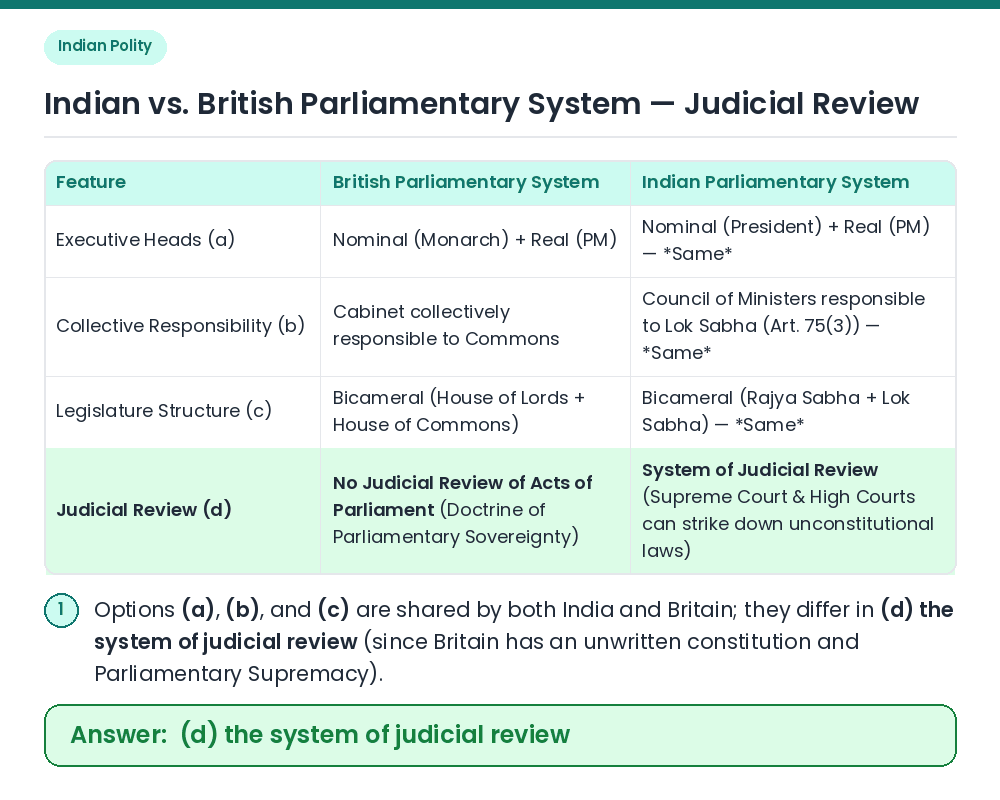
Answer: (D) the system of judicial review
Given / Concept: India adopted the Westminster parliamentary model from Britain, but with important constitutional modifications. Compare Shared Features: Both India and Britain have a dual executive (nominal head and real head — a), collective responsibility of the cabinet to the lower house (b), and a bicameral legislature (c). Identify the Difference: Britain follows the doctrine of 'Parliamentary Sovereignty' (courts cannot declare an Act of the British Parliament unconstitutional), whereas India has a written Constitution with Fundamental Rights and a robust system of 'Judicial Review' (borrowed from the US model under Articles 13, 32, and 226). Result: India differs from the British parliamentary system in having the system of judicial review. Related Facts: • Basic Structure Doctrine: In Kesavananda Bharati vs. State of Kerala (1973) and Minerva Mills (1980), the Supreme Court held that Judicial Review is an integral part of the 'Basic Structure' of the Indian Constitution. • Other Differences: India is a Republic with an elected President (whereas Britain has a hereditary Monarch), and the Indian PM can be a member of either House (whereas the British PM must belong to the House of Commons). Correct Answer: (d) the system of judicial review