Civil Services Examination · Question 125
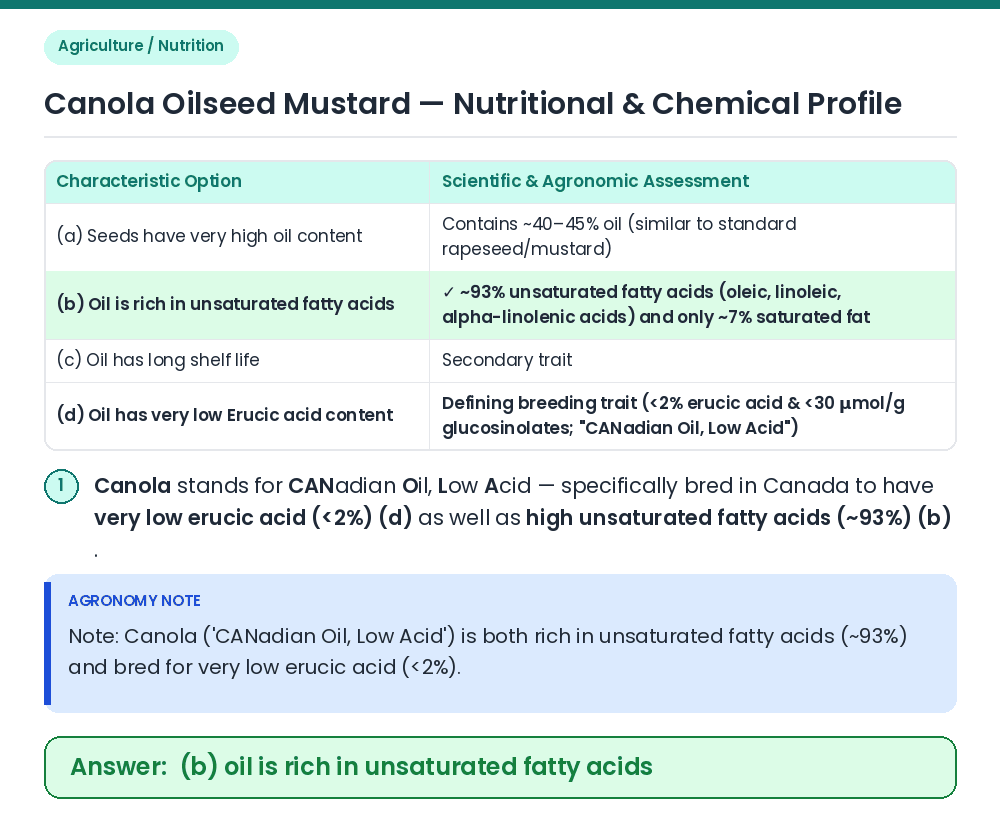
Canola refers to special type of oil seed mustard varieties bred for human consumption. The main characteristic of these varieties is that the
Show answer & explanationShow explanation
Answer: (B) oil is rich in unsaturated fatty acids
Concept: Natural rapeseed and mustard oils contain high levels of erucic acid (20–50%, linked to cardiac lipidosis) and glucosinolates (pungent anti-nutritional compounds). Canola Breeding & Properties: Canola ('CANadian Oil, Low Acid', bred in Canada in the 1970s from Brassica napus and Brassica rapa) is characterized both by having very low erucic acid content (<2% in oil) and glucosinolates (<30 micromoles/g in meal), and by being rich in heart-healthy unsaturated fatty acids (~60% monounsaturated oleic acid and ~30% polyunsaturated omega-6/omega-3 fatty acids). Result: Canola oil is rich in heart-healthy unsaturated fatty acids (b) and also has very low erucic acid content (<2%, d). Related Facts: • Double-Zero ('00') Varieties: Rapeseed-mustard varieties having both low erucic acid (<2%) and low glucosinolates (<30 μmol/g) are called 'Double Zero' or Canola-quality varieties. • Lowest Saturated Fat: Canola oil has the lowest saturated fat content (~7%) among common cooking oils. Correct Answer: (b) oil is rich in unsaturated fatty acids