Civil Services Examination · Question 125
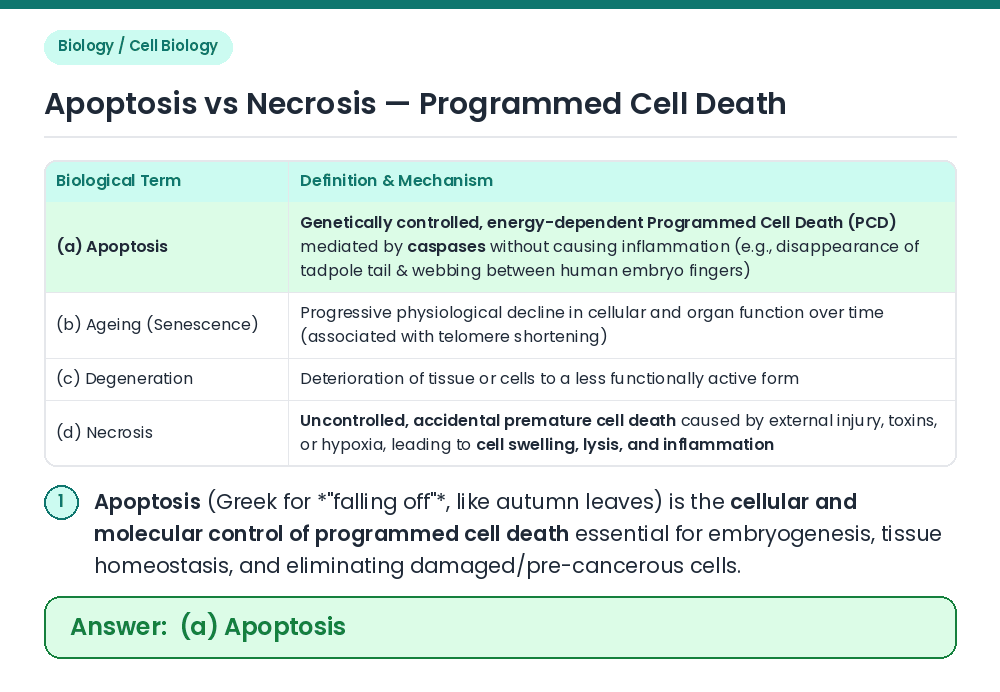
The cellular and molecular control of programmed cell death is known as
Show answer & explanationShow explanation
Answer: (A) Apoptosis
Concept: Multicellular organisms maintain tissue homeostasis and sculpt organs during embryonic development by eliminating unneeded or damaged cells through a tightly regulated genetic pathway. Identify the Term: ⇒ Apoptosis is the cellular and molecular process of programmed cell death (mediated by intracellular proteolytic enzymes called caspases, Bcl-2 family proteins, and cytochrome c release from mitochondria). Contrast with Necrosis: ⇒ Unlike Necrosis (which is traumatic, unregulated cell death resulting in cell rupture and inflammation), apoptosis involves orderly cell shrinkage, chromatin condensation, and clean phagocytosis of apoptotic bodies without inflammation. Result: Programmed cell death is known as Apoptosis. Related Facts: • 2002 Nobel Prize in Physiology or Medicine: Awarded to Sydney Brenner, H. Robert Horvitz, and John E. Sulston for their discoveries concerning genetic regulation of organ development and programmed cell death (apoptosis) using the nematode model 'Caenorhabditis elegans'. Correct Answer: (a) Apoptosis