Civil Services Examination · Question 88
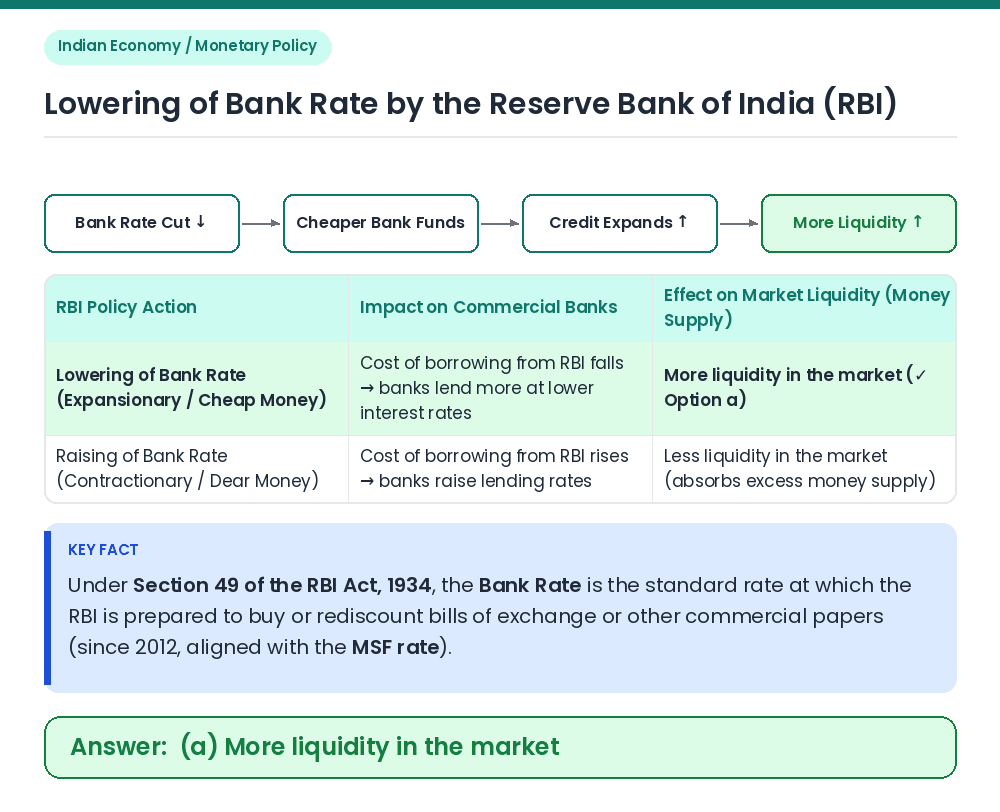
The lowering of Bank Rate by the Reserve Bank of India leads to
Show answer & explanationShow explanation
Answer: (A) More liquidity in the market
Define Bank Rate: Bank Rate is the rate of interest at which the Reserve Bank of India (RBI) provides long-term funds/refinancing to commercial banks without collateral (by rediscounting bills of exchange under Section 49 of the RBI Act, 1934). Trace the monetary transmission of lowering Bank Rate: When the RBI lowers the Bank Rate (an expansionary or 'cheap money' policy), commercial banks can borrow funds from the RBI at a lower cost. Banks in turn reduce their lending rates for businesses and consumers, leading to higher credit off-take and more liquidity (money supply) in the market. Related Facts: • Under Section 49 of the RBI Act, 1934, the Bank Rate is the standard rate at which the RBI is prepared to buy or rediscount bills of exchange or other commercial papers. • Lowering the Bank Rate (an expansionary or 'cheap money' policy) reduces commercial banks' borrowing cost from the RBI, expanding credit and increasing market liquidity. Correct Answer: (a) More liquidity in the market