Civil Services Examination · Question 30
Acid rain is caused by the pollution of environment by
Show answer & explanationShow explanation
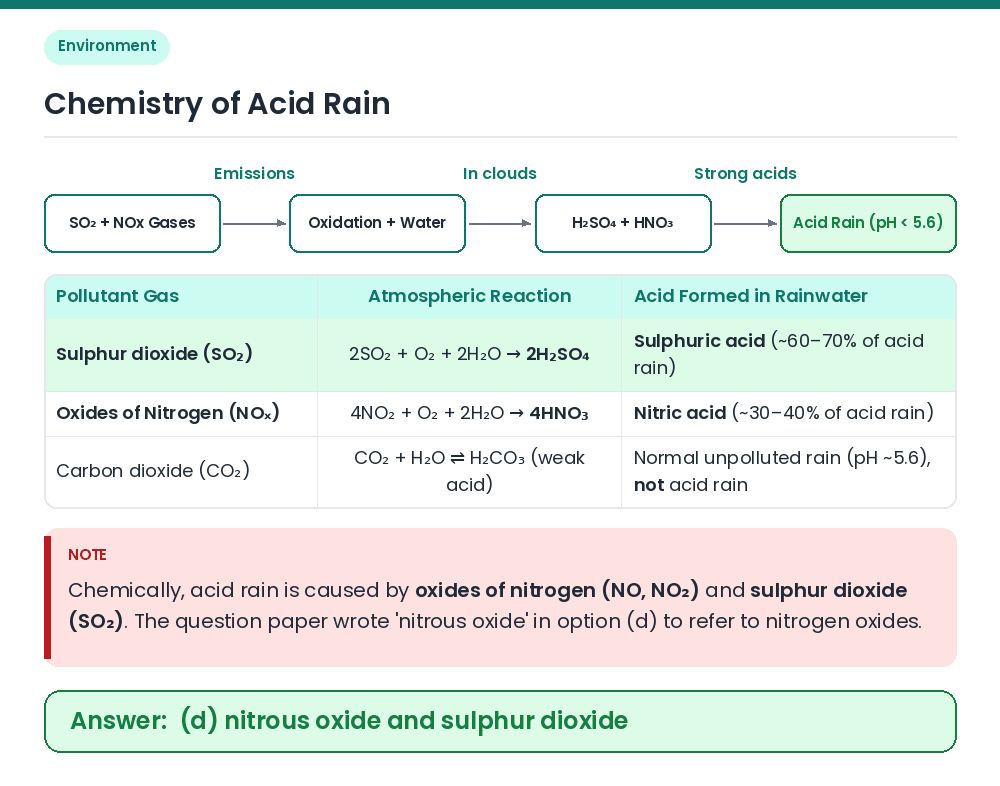
Answer: (D) nitrous oxide and sulphur dioxide
Concept: Acid rain is precipitation (rain, snow or fog) with a pH below 5.6 caused by acidic oxides dissolving and oxidizing in atmospheric moisture. Chemical Reactions: Sulphur dioxide (SO₂) from coal-fired power plants and smelters oxidizes to form sulphuric acid (H₂SO₄), while oxides of nitrogen (NOₓ, from vehicular and industrial emissions) oxidize to form nitric acid (HNO₃). Step 3 (Terminology Note on Option (d)): Strictly speaking, nitrogen dioxide (NO₂) and nitric oxide (NO) form nitric acid in acid rain, whereas nitrous oxide (N₂O) is a greenhouse gas; however, UPSC used the phrase 'nitrous oxide and sulphur dioxide' in option (d) to represent nitrogen and sulphur oxides, making (d) the official answer. Result: Option (d) is the correct answer. Related Facts: • Normal Rain pH (~5.6): Unpolluted rainwater is slightly acidic (pH ~5.6) due to dissolved atmospheric CO₂ forming weak carbonic acid (H₂CO₃). • Marble Cancer: Acid rain reacts with calcium carbonate (CaCO₃) of marble monuments like the Taj Mahal to form soluble calcium sulphate, causing yellowing and pitting. Correct Answer: (d) nitrous oxide and sulphur dioxide