Civil Services Examination · Question 27
Improper handling and storage of cereal grains and oilseeds result in the production of toxins known as aflatoxins which are not generally destroyed by normal cooking process. Aflatoxins are produced by
Show answer & explanationShow explanation
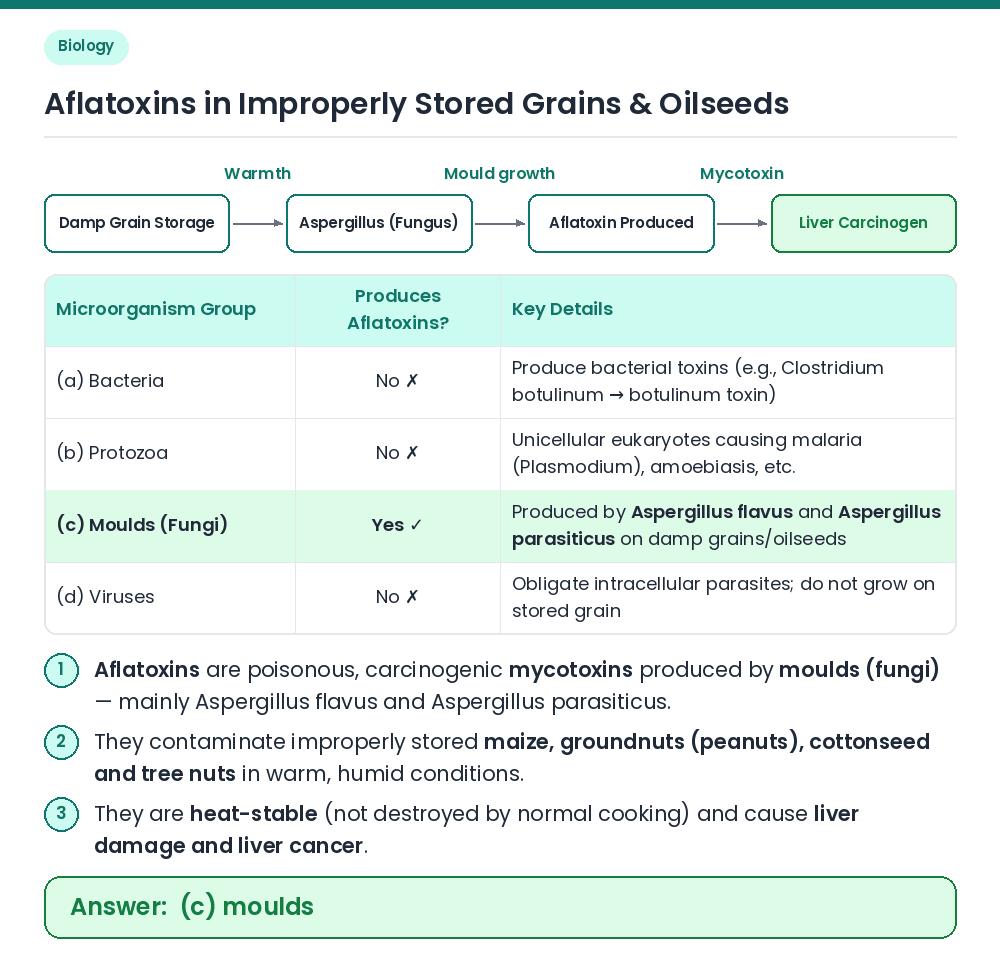
Answer: (C) moulds
Concept: Aflatoxins are a family of potent mycotoxins (fungal toxins) contaminating agricultural crops during pre-harvest and post-harvest storage. Causative Organism: Aflatoxins are produced by certain moulds (fungi), principally Aspergillus flavus and Aspergillus parasiticus, which grow on warm and damp cereal grains (maize, sorghum, rice) and oilseeds (groundnut, cottonseed). Properties & Health Impact: Because aflatoxins have high thermal stability (decomposing only above ~250°C), normal cooking processes do not destroy them. They are hepatotoxic and carcinogenic (causing liver cancer). Result: Aflatoxins are produced by moulds. Related Facts: • Aflatoxin M1: When dairy cattle consume feed contaminated with Aflatoxin B1, they excrete its metabolite Aflatoxin M1 in milk. • Prevention: Drying harvested grains and oilseeds to safe moisture levels (< 8–12%) prevents mould growth. Correct Answer: (c) moulds