Civil Services Examination · Question 91
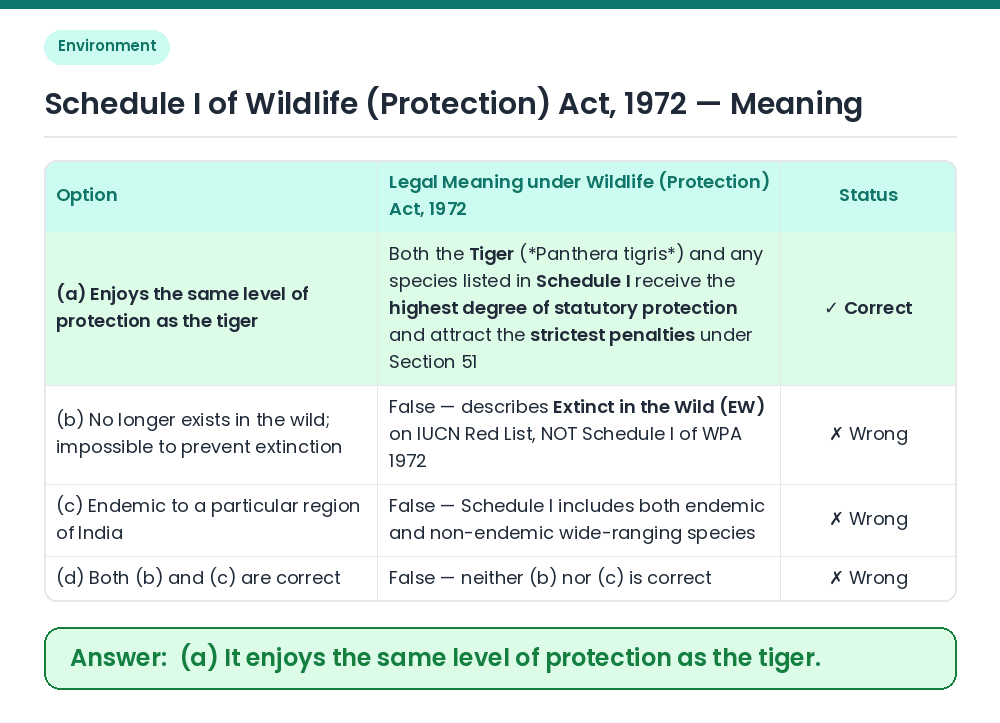
In India, if a species of tortoise is declared protected under Schedule I of the Wildlife (Protection) Act, 1972, what does it imply ? (a) It enjoys the same level of protection as the tiger. (b) It no longer exists in the wild, a few individuals are under captive protection; and now it is impossible to prevent its extinction. (c) It is endemic to a particular region of India. (d) Both (b) and (c) stated above are correct in this context.
Show answer & explanationShow explanation
Answer: (A) It enjoys the same level of protection as the tiger.
Concept: Schedule I of the Wildlife (Protection) Act, 1972 lists endangered wildlife species that are accorded absolute legal protection from hunting, poaching, and trade across India. Compare with the Tiger: Since the Bengal Tiger (Panthera tigris) is also listed in Schedule I of the Act, any tortoise species placed in Schedule I enjoys the exact same highest level of legal protection and stringency of penalties (under Section 51) as the tiger. Result: Option (a) is the correct implication. Related Facts: • Schedule Structure (1972 vs 2022 Amendment): The original 1972 Act had 6 schedules (Schedules I and Part II of Schedule II gave absolute protection); the 2022 Amendment streamlined them into 4 schedules, keeping Schedule I for animal species with the highest level of protection. Correct Answer: (a) It enjoys the same level of protection as the tiger.