Civil Services Examination · Question 99
Consider the following : 1. Birds 2. Dust blowing 3. Rain 4. Wind blowing Which of the above spread plant diseases ?
Show answer & explanationShow explanation
Answer: (D) 1, 2, 3 and 4
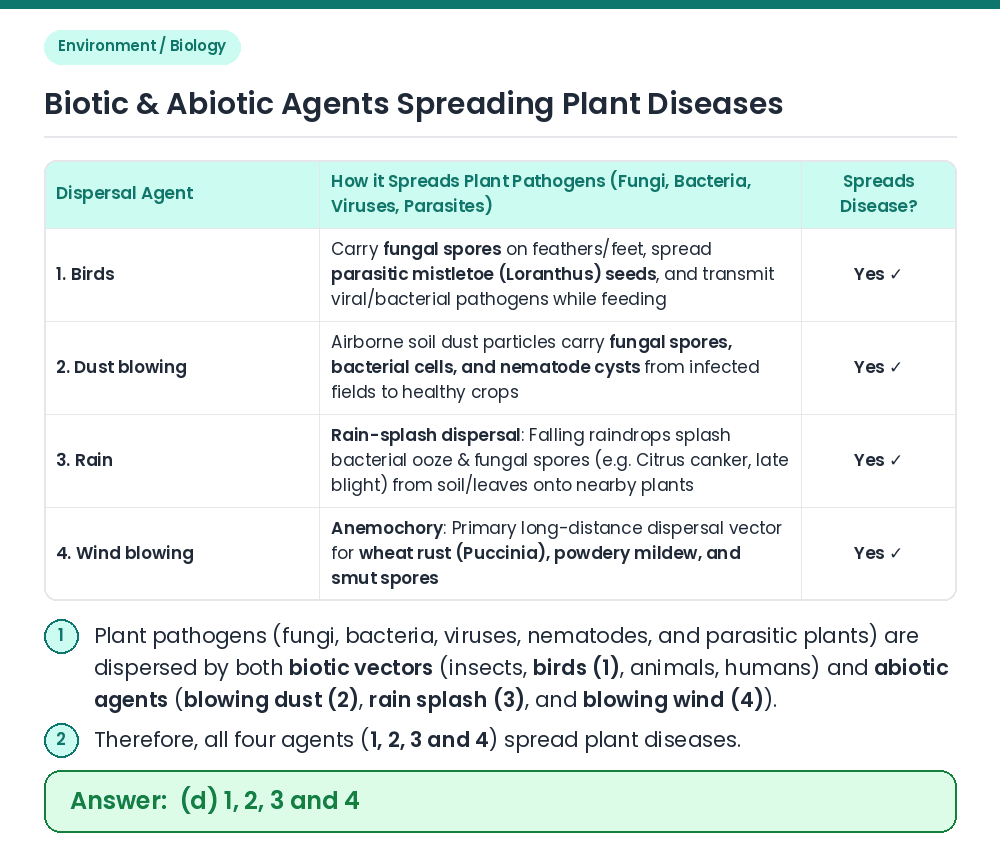
Concept: Mechanisms of plant pathogen dispersal (dissemination of fungal spores, bacteria, viruses, and parasitic seeds) via biotic and abiotic agents. Verify Each Agent: • 1. Birds (Biotic Vector): Birds spread sticky seeds of parasitic plants like Loranthus and Viscum (mistletoes), carry fungal spores (e.g., chestnut blight) and bacteria (e.g., Erwinia amylovora causing fire blight) on their beaks, feet, and feathers. • 2. Dust blowing (Abiotic Vector): Wind-blown soil and dust particles carry resting spores of soil-borne fungi, bacteria (Streptomyces, Xanthomonas), and nematode cysts across fields. • 3. Rain (Hydrochory / Rain-Splash): Raindrops hitting infected leaves or soil splash bacterial exudates and fungal conidia (such as Citrus canker, anthracnose, and late blight of potato) onto healthy leaves and stems. • 4. Wind blowing (Anemochory): The most powerful long-distance carrier of fungal spores — such as Puccinia graminis (wheat rust), powdery mildews, and smuts — over hundreds of kilometres. Result: All four (1, 2, 3 and 4) spread plant diseases, making option (d) correct. Related Facts: • Major Plant Diseases by Pathogen Type: – Fungal: Wheat Rust (Puccinia), Red Rot of Sugarcane (Colletotrichum falcatum), Late Blight of Potato (Phytophthora infestans), Tikka Disease of Groundnut. – Bacterial: Citrus Canker (Xanthomonas citri), Bacterial Leaf Blight of Rice (Xanthomonas oryzae), Black Rot of Crucifers. – Viral: Tobacco Mosaic Virus (TMV, transmitted by contact/aphids), Yellow Vein Mosaic of Bhindi (transmitted by whitefly), Bunchy Top of Banana (transmitted by banana aphid). Correct Answer: (d) 1, 2, 3 and 4