Civil Services Examination · Question 10
With reference to forced labour (Vishti) in India during the Gupta period, which one of the following statements is correct?
Show answer & explanationShow explanation
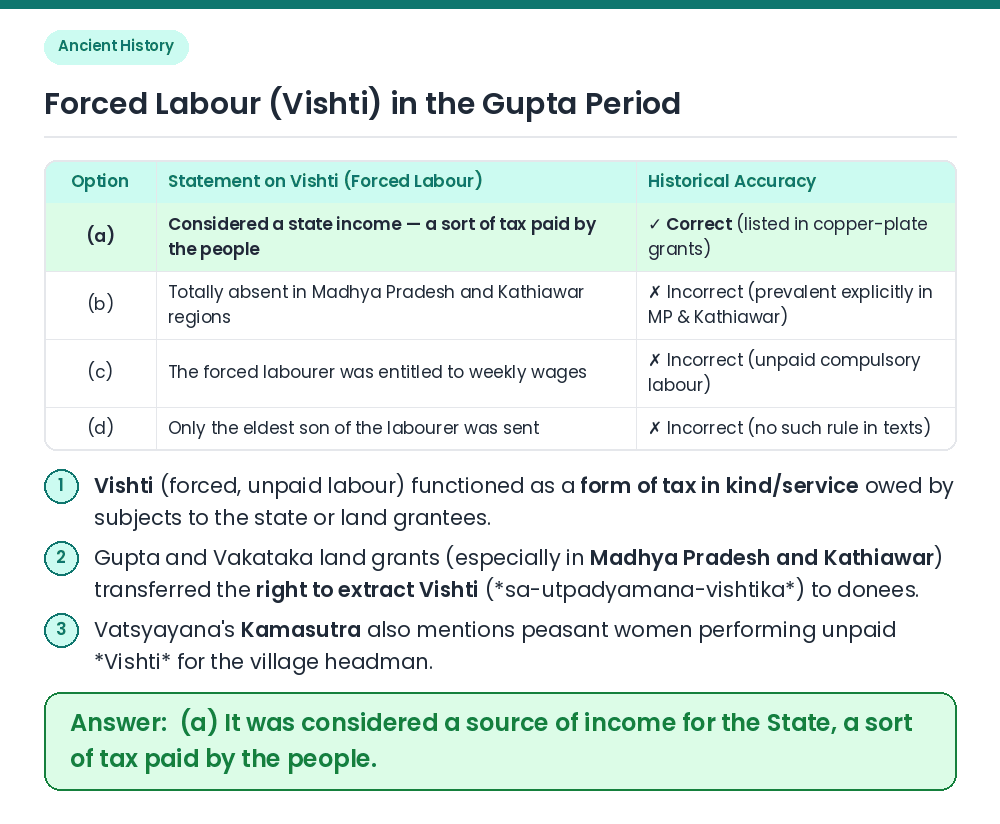
Answer: (A) It was considered a source of income for the State, a sort of tax paid by the people.
Given / Concept: In ancient India (especially during the Gupta period), Vishti referred to compulsory, unpaid labour extracted by the State or feudal land grantees. Evaluating Options b, c, d: Inscriptions from Madhya Pradesh and Kathiawar (such as the Junagadh inscription and Vakataka copper plates) frequently mention Vishti ⇒ Option (b) is false; Vishti was unpaid (Option c false) and was not restricted to the eldest son (Option d false). Evaluating Option a: Since the right to collect Vishti was transferred alongside land revenue taxes in royal grants, it was treated as a fiscal resource / tax paid in labour by the people (Option a ✓). Result: Vishti was considered a form of tax paid by the people to the State. Related Facts: • Other Gupta Taxes: Bhaga (king's 1/6th share of produce), Bhoga (periodic supplies of fruits/firewood), Kara, and Udranga. • Junagadh Rock Inscription: Rudradaman I boasted of repairing the Sudarshana Lake without burdening people with extra Kara, Vishti, or Pranaya. Correct Answer: (a) It was considered a source of income for the State, a sort of tax paid by the people.