Civil Services Examination · Question 25
Which of the following phrases defines the nature of the 'Hundi' generally referred to in the sources of the post-Harsha period?
Show answer & explanationShow explanation
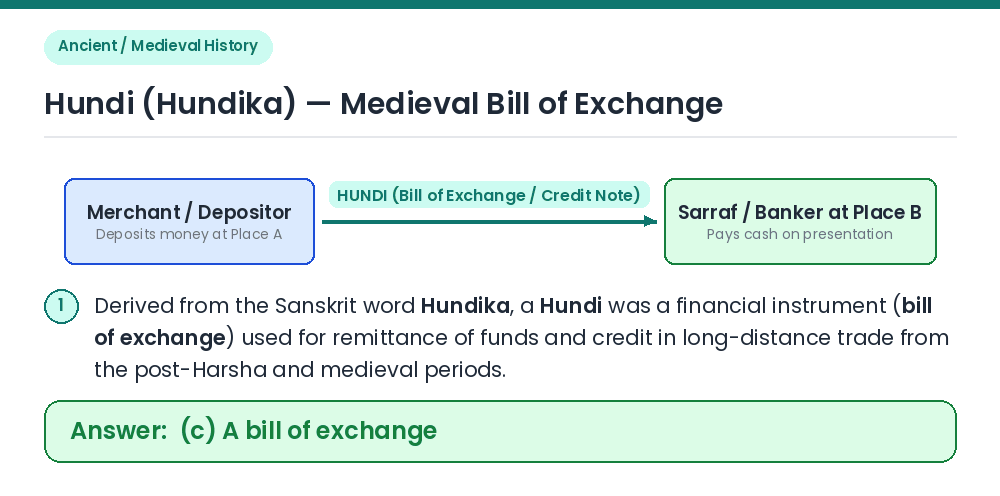
Answer: (C) A bill of exchange
Given / Concept: Financial and commercial instruments in early medieval (post-Harsha) and medieval India. Definition of Hundi: A 'Hundi' (from Sanskrit 'Hundika') was a written unconditional order or credit note made by one person directing another (usually a Sarraf or banker) to pay a specified sum of money to a named person ⇒ a bill of exchange. Economic Function: It enabled merchants to transfer funds safely across distant trade centres without carrying physical gold or silver coins. Result: 'Hundi' refers to a bill of exchange. Related Facts: • Rajatarangini Reference: Kalhana's Rajatarangini (12th century) mentions kings paying troops through Hundikas (bills of exchange). • Types of Hundis: Darshani Hundi (payable on sight/demand) and Muddati Hundi (payable after a specified period). Correct Answer: (c) A bill of exchange