Civil Services Examination · Question 29
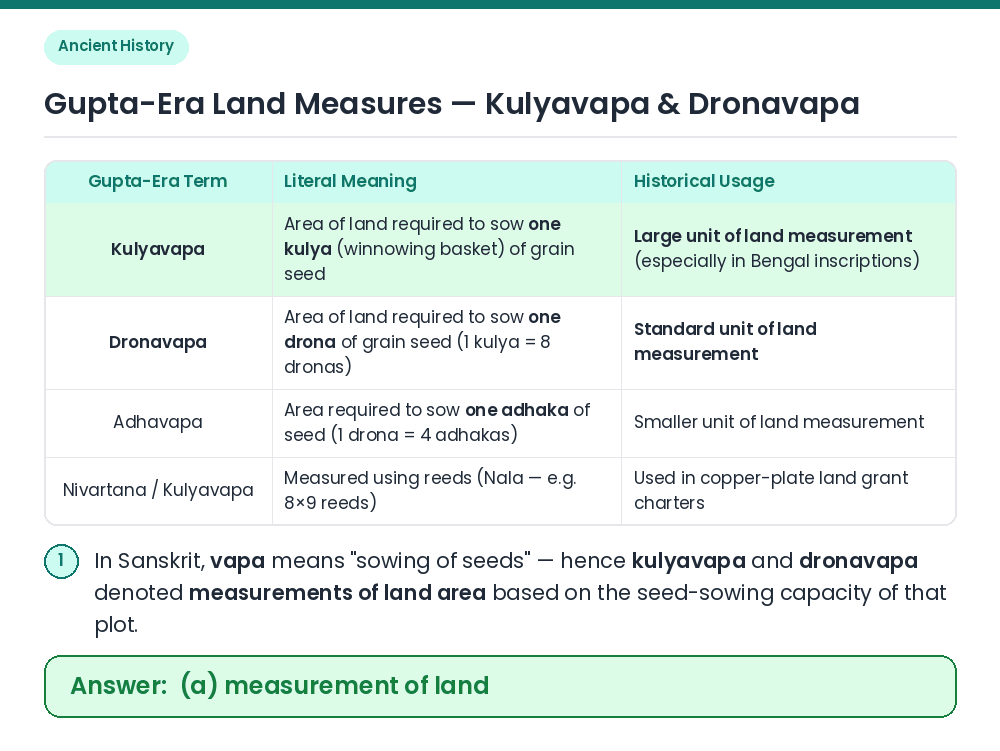
With reference to the history of India, the terms "kulyavapa" and "dronavapa" denote
Show answer & explanationShow explanation
Answer: (A) measurement of land
Given / Concept: Agrarian and revenue terminology in Gupta and post-Gupta copper-plate inscriptions. Etymology: The suffix '-vapa' comes from the Sanskrit root meaning 'to sow'; 'kulya' and 'drona' were volumetric measures of grain. Meaning: 'Kulyavapa' and 'dronavapa' denoted the area of agricultural land required to sow one kulya and one drona of grain seeds respectively (1 kulyavapa = 8 dronavapas). Result: The terms denote measurement of land. Related Facts: • Other Gupta Land Units: Adhavapa (smaller unit; 4 adhavapas = 1 dronavapa), Pataka (larger unit; 5 kulyavapas = 1 pataka), and Nivartana. • Types of Land in Gupta Period: Kshetra (cultivable land), Khila (wasteland/fallow), Aprahata (forest/uncultivated land), and Vastu (habitable land). Correct Answer: (a) measurement of land