Civil Services Examination · Question 33
Indigo cultivation in India declined by the beginning of the 20th century because of
Show answer & explanationShow explanation
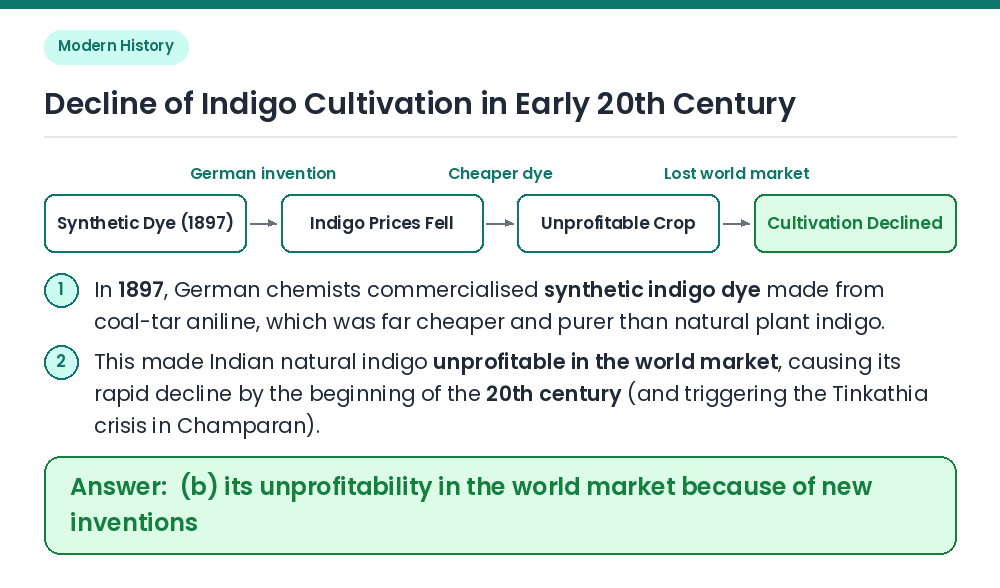
Answer: (B) its unprofitability in the world market because of new inventions
Given / Concept: Economic cause of the collapse of natural indigo plantations in India around 1900. Technological Invention: Germany developed and commercially manufactured synthetic chemical indigo dye (from aniline/coal-tar derivatives) in the late 1890s. Market Impact: Synthetic dye drastically undercut the price of natural Indian indigo in international markets, making natural indigo cultivation unprofitable. Result: Indigo cultivation declined by the beginning of the 20th century because of its unprofitability in the world market due to new inventions. Related Facts: • Champaran Satyagraha (1917): When synthetic dyes ruined indigo profits, European planters in Champaran (Bihar) forced peasants under the Tinkathia system (3/20th land) to pay illegal enhancements (Sharahbeshi) or lump-sum compensation (Tawan) to be released from growing indigo. • Bengal Indigo Revolt (1859–60): Earlier peasant revolt led by Digambar Biswas and Bishnu Biswas in Nadia district. Correct Answer: (b) its unprofitability in the world market because of new inventions