Civil Services Examination · Question 51
Mr. X, a senior officer, was overseeing a critical vaccination programme during a pandemic. He found that a private service provider responsible for vaccine distribution was compromising on quality to make profits. Despite immense pressure to manage the issue due to vested interests, he raised his voice based on the principles of public administration which he learnt during various training programmes attended across his career. He reported the issue to the appropriate vigilance authority and halted the contract to ensure citizen welfare. Which one among the following principles of public administration was most strongly demonstrated by Mr. X's actions ?
Show answer & explanationShow explanation
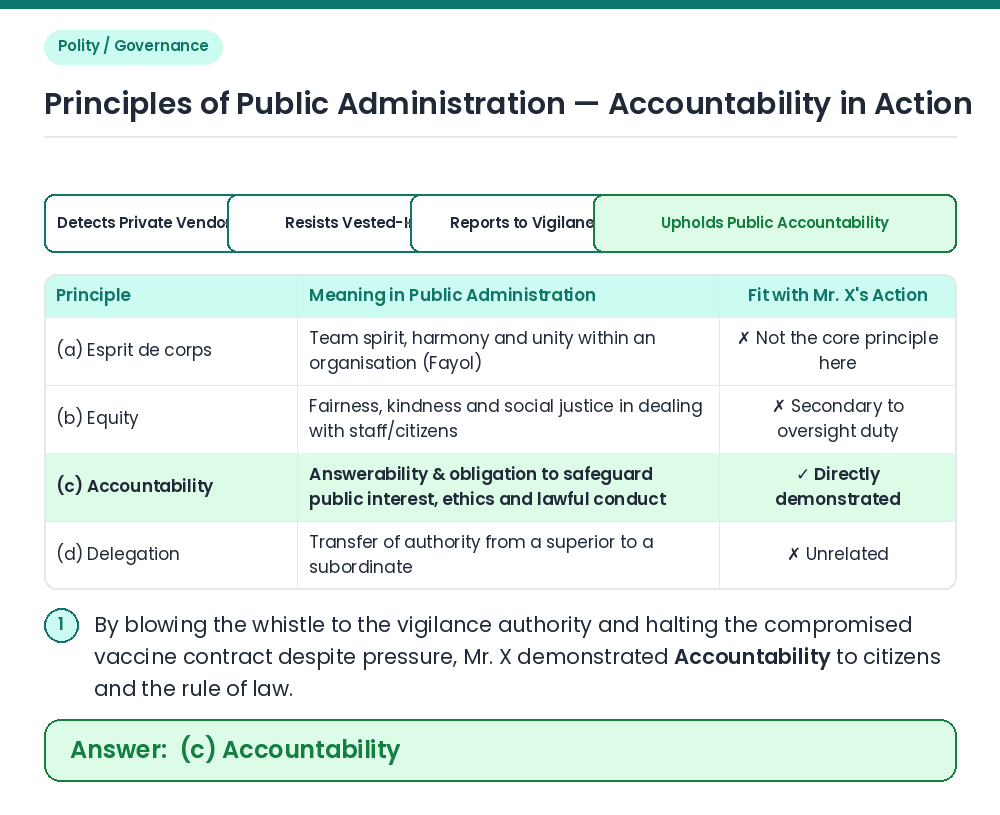
Answer: (C) Accountability
Concept: In public administration, accountability is the ethical and legal obligation of public officials to be answerable for their decisions, enforce standards, and protect citizen welfare above private or vested interests. Analyse Mr. X's Action: ⇒ Mr. X detected quality compromise in a critical pandemic vaccination contract, resisted external pressure from vested interests, reported the wrongdoing to the vigilance authority, and stopped the contract. Compare with Other Options: ⇒ 'Esprit de corps' means team spirit, 'Equity' means fairness/impartiality, and 'Delegation' means assigning authority downward — none of these capture the whistleblowing and oversight enforcement shown by Mr. X. Result: Mr. X's actions most strongly demonstrated the principle of Accountability. Related Facts: Nolan Committee's Seven Principles of Public Life (1995): • Core Pillars: Selflessness, Integrity, Objectivity, Accountability, Openness, Honesty, and Leadership. • Vigilance Framework in India: The Central Vigilance Commission (CVC, statutory status in 2003) and the Whistle Blowers Protection Act, 2014 safeguard public interest disclosures. Correct Answer: (c) Accountability