Civil Services Examination · Question 87
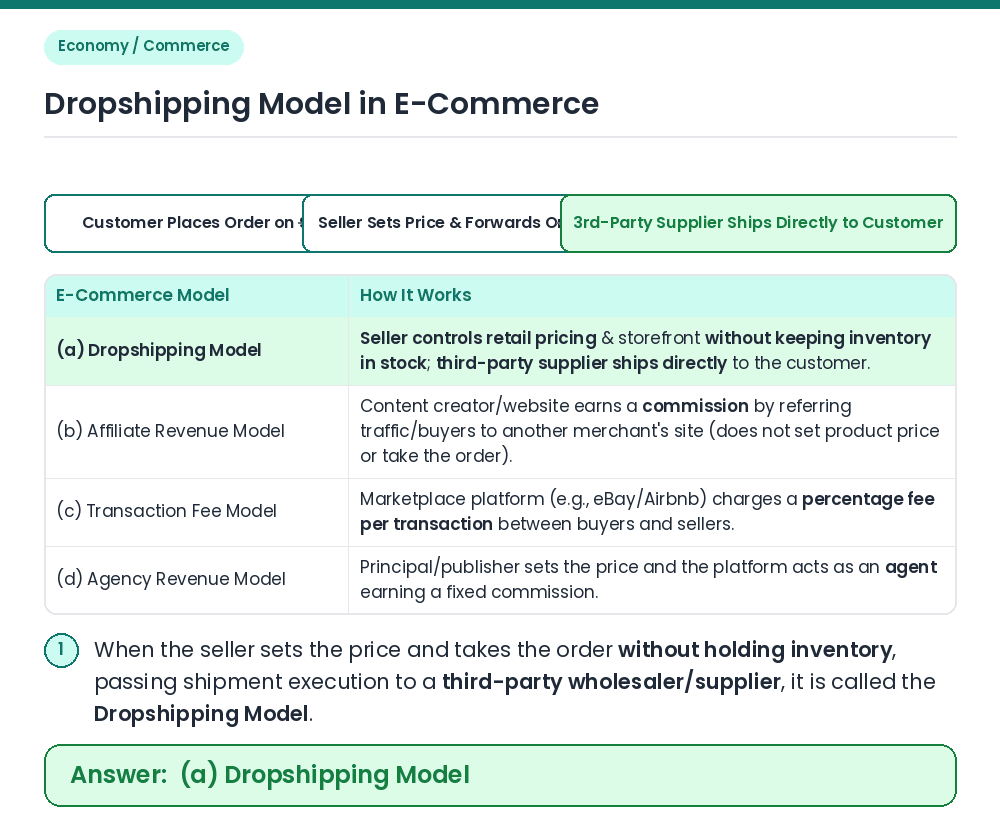
An e-commerce revenue model where the seller has control over pricing but doesn't keep products in stock and instead transfers customer orders and shipment details to a third-party supplier, who then ships the goods directly to the customer, is called :
Show answer & explanationShow explanation
Answer: (A) Dropshipping Model
Concept: E-commerce fulfilment and revenue models differ based on who owns inventory, who sets the retail price, and who handles logistics. Analyse the Given Mechanism: ⇒ In the described model, the online seller runs the digital storefront and controls the retail price charged to the buyer, but holds zero physical inventory; once an order is placed, the seller forwards the order and shipping address (along with the wholesale payment) to a third-party manufacturer/wholesaler, who packages and ships the product directly to the customer. Match the Term: ⇒ This exact retail fulfilment method is known globally as the 'Dropshipping Model' (the seller's profit is the margin between the retail price they set and the wholesale price charged by the supplier). Result: The model is called the Dropshipping Model. Related Facts: Other E-Commerce Business Models: • Inventory Model vs Marketplace Model (FDI Policy in India): In an Inventory-based model, the e-commerce entity owns the goods and sells directly to consumers; in a Marketplace model, the platform acts as an IT facilitator between independent sellers and buyers. • Affiliate Model: Generates revenue by earning referral commissions on sales completed on an external merchant's site. Correct Answer: (a) Dropshipping Model