UP Super TET · Question 69
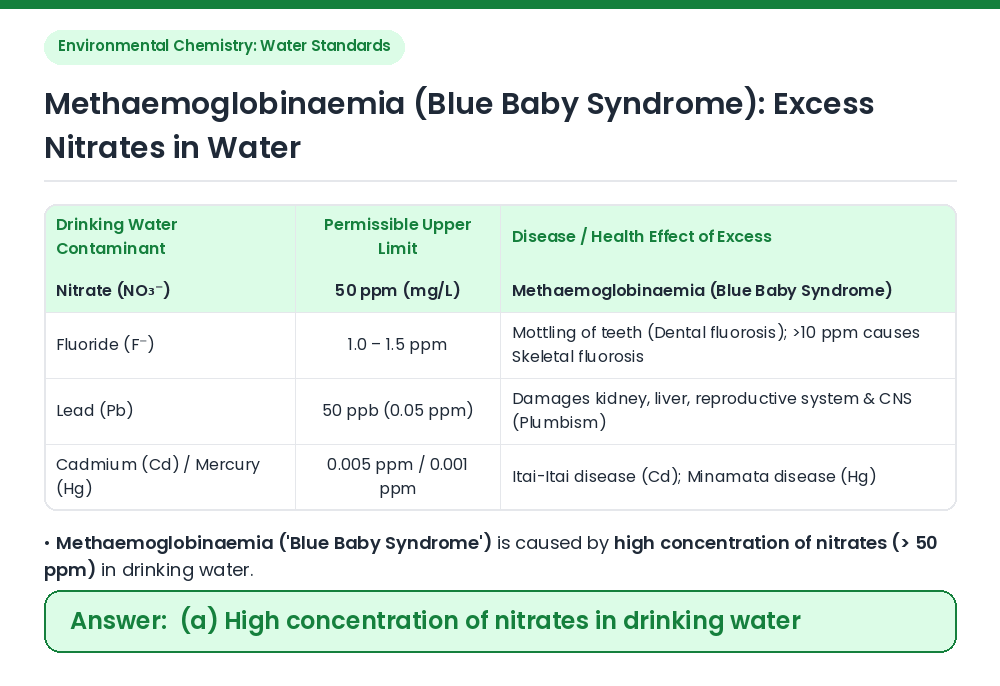
Methaemoglobinaemia disease is caused by
Show answer & explanationShow explanation
Answer: (A) High concentration of nitrates in drinking water
Methaemoglobinaemia (popularly called 'Blue Baby Syndrome') is caused by a high concentration of nitrates (NO₃⁻) in drinking water. According to NCERT Chemistry (Environmental Chemistry) and WHO/BIS drinking water standards, the maximum permissible limit of nitrate in drinking water is 50 ppm (mg/L); excess nitrate in drinking water is converted in the infant gut and oxidizes ferrous iron (Fe²⁺) of haemoglobin into ferric iron (Fe³⁺) to form methaemoglobin, which cannot bind and transport oxygen. Why other options are wrong: • (b) High concentration of fluorides: Causes dental fluorosis (mottling of teeth above 2 ppm) and skeletal fluorosis (above 10 ppm). • (c) High concentration of nitrites: Drinking water quality standards specifically regulate Nitrate (NO₃⁻ > 50 ppm) as the water-borne pollutant causing methaemoglobinaemia. • (d) High concentration of CH₄: Methane is not the cause of methaemoglobinaemia. Related Facts: • Excess sulfate (> 500 ppm) in drinking water causes a laxative effect. • Mercury contamination in water causes Minamata disease, and Cadmium contamination causes Itai-Itai (Ouch-Ouch) disease. Correct Answer: (a) High concentration of nitrates in drinking water