Civil Services Examination · Question 36
Mahatma Gandhi undertook fast unto death in 1932, mainly because
Show answer & explanationShow explanation
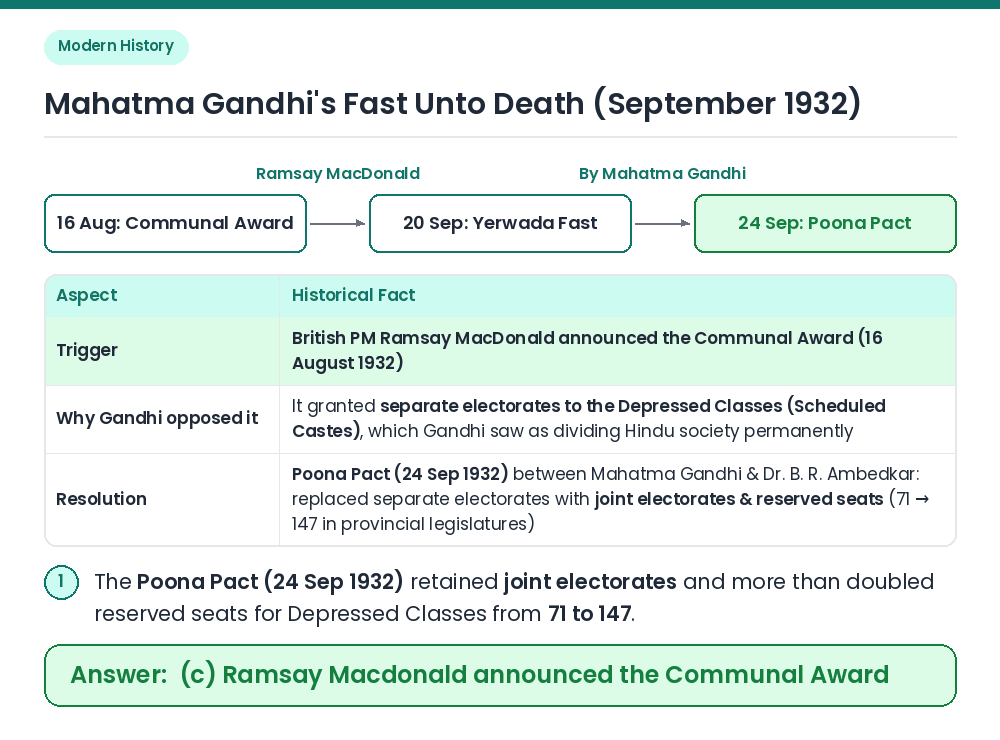
Answer: (C) Ramsay Macdonald announced the Communal Award
Given / Concept: On 16 August 1932, British Prime Minister Ramsay MacDonald announced the 'Communal Award' following the Second Round Table Conference. Reason for Fast: The Communal Award treated the Depressed Classes (Scheduled Castes) as a separate minority and granted them separate electorates alongside Muslims, Sikhs, and Christians. Viewing this as an attempt to divide Hindu society, Mahatma Gandhi began a fast unto death in Yerwada Central Jail (Poona) on 20 September 1932 ⇒ Option (c) is correct. Resolution via Poona Pact: The fast ended on 24 September 1932 with the signing of the Poona Pact between Dr. B. R. Ambedkar and Madan Mohan Malaviya (on behalf of Gandhi and caste Hindus). Result: Mahatma Gandhi undertook the fast unto death in 1932 mainly because Ramsay MacDonald announced the Communal Award. Related Facts: Key outcomes of the Poona Pact (24 September 1932): • Joint Electorates Retained: Abandoned separate electorates for the Depressed Classes in favour of joint electorates with reserved seats. • Increased Seat Reservation: Reserved seats for the Depressed Classes in Provincial Legislatures were more than doubled from 71 (under the Communal Award) to 147 (and 18% of British India seats in the Central Legislature). • Harijan Sevak Sangh: Following the pact, Gandhi founded the All India Anti-Untouchability League (later Harijan Sevak Sangh) in September 1932 and started the journal 'Harijan' in 1933. Correct Answer: (c) Ramsay Macdonald announced the Communal Award